
The Catholic Church just entered the AI debate — and did so at scale.
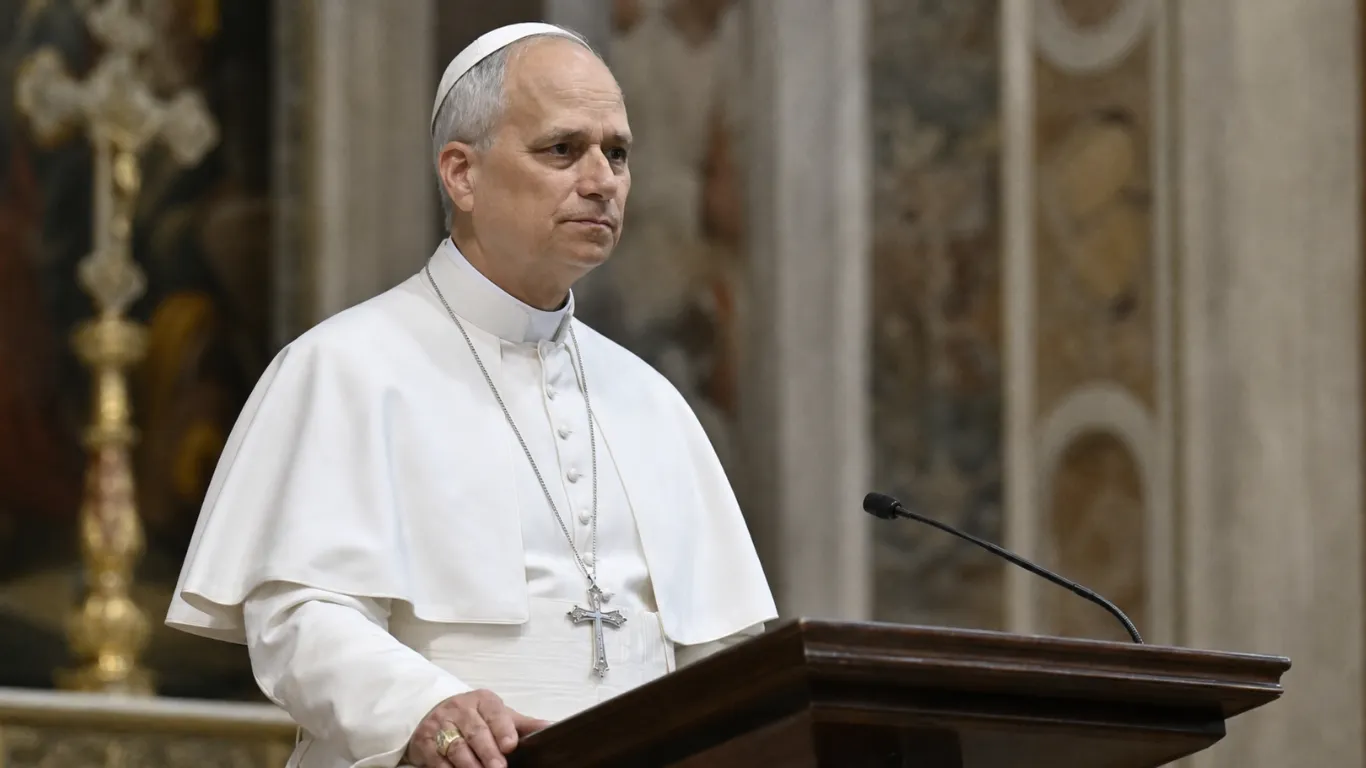
Pope Leo XIV released his first major papal encyclical, “Magnifica Humanitas”, warning the world to “disarm” artificial intelligence before it weakens human relationships, critical thinking, and peace itself. The 42,300-word document, released Monday, marks Leo’s most sweeping statement yet on the promise and dangers of AI.
CBS News confirmed the encyclical significantly boosts the Catholic Church’s position as an active voice in discussions over AI, autonomous weapons, labor, human dignity, and the concentration of technological power among a handful of corporations.
For Pakistan’s growing IT sector — and the hundreds of thousands of young Pakistanis whose career paths run directly through AI-adjacent work — this document matters more than it might initially appear.

What Magnifica Humanitas Actually Says
Cardinal Michael Czerny offered the most precise framing of the encyclical’s intent when speaking to CBS News: “Please note that the encyclical is not about AI. It’s about the human condition during the time of AI.”
That distinction is important. Time magazine’s encyclical coverage confirmed the document frames the current technological revolution not merely as an economic challenge but as what the Pope calls an “anthropological” crisis — touching the meaning and purpose of humanity itself.
The document makes several specific arguments:
- On AI and War: Leo wrote that “the ‘just war’ theory, which has all too often been used to justify any kind of war, is now outdated” — a direct reference to how autonomous weapons and AI-guided military systems are changing the ethics of armed conflict. Relevant context: the US-Iran conflict mediated by Pakistan has already seen AI-guided drone systems in active use.
- On Power Concentration: The encyclical warned against “a race for ever more powerful algorithms and larger datasets, driven by the desire to secure geopolitical or commercial dominance.” The Vatican is explicitly naming the handful of US technology companies that control most of the world’s AI infrastructure.
- On Progress: Rather than rejecting technology, NCR Online’s detailed analysis confirmed Leo wrote that “technology should not be considered, in itself, as a force antagonistic to humanity” — but must be guided by ethical use.
- On Pace: “Calling for prudence, rigorous evaluation and even, at times, a slower pace in adopting AI does not mean opposing progress. Instead, it is an exercise of responsible care for the human family.”

The Anthropic Connection: Why a Tech CEO Stood Next to the Pope
The most unusual element of this Pope Leo AI encyclical launch was who stood at the podium alongside the pontiff.
NCR Online reported Leo presented the encyclical at the Vatican alongside Christopher Olah, a co-founder of Anthropic — one of the world’s leading AI safety companies, creator of the Claude AI assistant.
Olah’s remarks were direct: “We need informed critics who will tell the labs when we are failing.” He acknowledged that AI companies work “inside a set of incentives and constraints that can sometimes conflict with doing the right thing” — and welcomed external ethical input from institutions like the Catholic Church.
Washington Post’s encyclical analysis described the image of a Pope and an AI company co-founder presenting a document together as one of the more striking symbols of 2026 — a religious institution and a technology company finding common cause on a question of human dignity.
Why the Pope Named Himself After Leo XIII
Time magazine noted Leo’s papal name itself carries the argument. He chose it in direct reference to Pope Leo XIII, whose 1891 encyclical “Rerum Novarum” addressed the social consequences of the Industrial Revolution — defending workers’ rights, fair wages, and human dignity in an era of mechanized labor.
Leo XIV has explicitly drawn the comparison: AI is ushering in a “new industrial revolution.” Just as Rerum Novarum shaped Catholic social teaching for over a century, Magnifica Humanitas is intended to do the same for the AI era.

What This Means for Pakistan’s Tech Workers
Pakistan’s IT sector employs over 500,000 workers and represents one of the country’s fastest-growing export industries. The Pakistan AI Training Programs we covered earlier in May reflect the government’s recognition that AI literacy is no longer optional.
The Pope’s warning about AI replacing human labor is directly relevant to Pakistani freelancers, software developers, and BPO workers:
- For Pakistani Freelancers on Upwork and Fiverr: Content writing, graphic design, and basic coding — the staple income streams for hundreds of thousands of Pakistani freelancers — are being disrupted by AI tools. The Pope Leo AI encyclical echoes what many are already experiencing firsthand.
- For Pakistan’s IT Export Ambitions: Pakistan’s $10 billion IT export target requires a strategic shift. If AI automates the services Pakistani firms provide to Western clients, growth depends on moving up the value chain — AI-enhanced services, not basic labor arbitrage.
- For CS Students at FAST, NUST, LUMS, COMSATS: The Pope’s framing is not anti-technology. It is pro-human. Becoming an AI-literate professional who works alongside AI tools — rather than competing against them — is the practical takeaway for every Pakistani engineering and computer science student.
The Vatican’s new study group on AI will work across multiple departments. USCCB’s encyclical coverage confirmed the document will now be studied by Catholic institutions, universities, and policymakers worldwide.
For Pakistan’s tech community, it is a reminder that the AI conversation is no longer just about code. It is about what kind of society we are building with it.