
The Israel Lebanon invasion entered a new and more dangerous phase Monday.
Israeli Prime Minister Benjamin Netanyahu instructed the Israeli military to expand its operations in Lebanon after capturing the strategic Beaufort Castle — describing the development as “a dramatic change” in Israel’s military campaign. Lebanese Prime Minister Nawaf Salam responded by accusing Israel of pursuing a “scorched-earth policy” against civilian areas.
Al Jazeera’s Lebanon war coverage confirmed the expansion. The escalation comes as Lebanon prepares for direct negotiations with Israel scheduled for June 2 and 3.
What Beaufort Castle Means
Beaufort Castle is not just a military objective. It is a Crusader-era hilltop fortress in southern Lebanon that carries enormous strategic and symbolic weight.
During Israel’s previous occupation of southern Lebanon from 1982 to 2000, Beaufort Castle served as a key Israeli military outpost. Its capture in the current campaign signals a territorial expansion well beyond the initial buffer zone — and Netanyahu’s explicit description of it as a “dramatic change” suggests Israel intends to hold this ground rather than withdraw it as a negotiating chip.
Wikipedia’s 2026 Lebanon war article confirmed the conflict has now resulted in the deaths of more than 3,000 people — militants and civilians — from Israeli strikes in Lebanon, with over 1 million displaced (more than 20% of Lebanon’s entire population).

The Scale of Israel’s Ground Operation
The Israel Lebanon invasion has grown systematically since March.
Wikipedia’s conflict timeline confirmed the IDF deployed a second division to southern Lebanon on March 17, launching the ground invasion. Israeli officials have drawn explicit comparisons to the Gaza war — with Israeli Defense Minister Israel Katz suggesting the operation could result in indefinite Israeli occupation of some Lebanese territory.
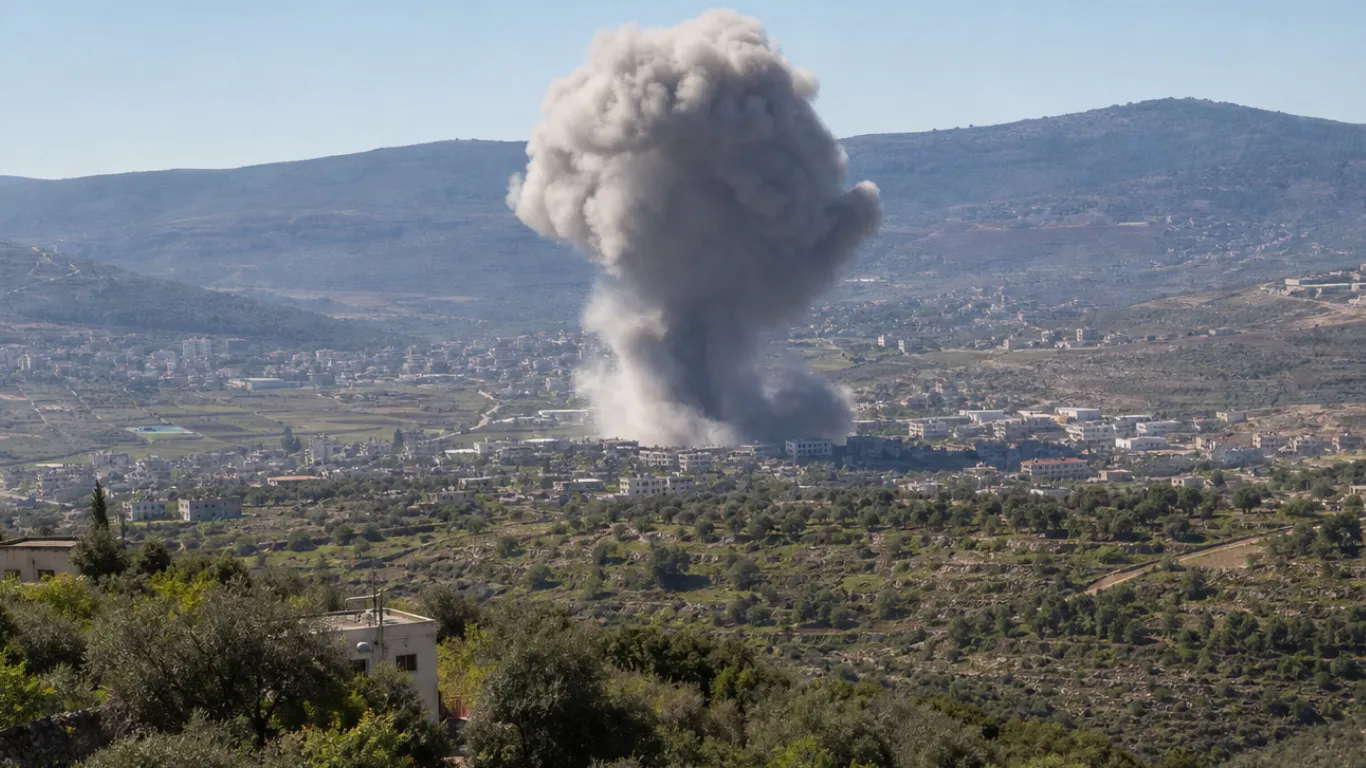
Since March, Israel has established an approximately 10km buffer zone in southern Lebanon. Al Jazeera’s Nabatieh coverage documented ongoing strikes on Nabatieh — the major southern city — as Israeli forces push further into densely populated areas.
By June 1, We Are Plan C’s Lebanon analysis confirmed Israeli forces killed at least 3,213 people in Lebanon since March 2, including paramedics and civilians.

Hezbollah Fights Back
Hezbollah has not ceded ground without resistance. The group confirmed its fighters clashed with Israeli forces in Zawtar al-Sharqiya, in the Nabatieh district, at what they described as “point-blank range.”
Despite Trump announcing a ceasefire on April 16, Al Jazeera’s geopolitical analysis quoted analyst Joe Macaron describing the Lebanese army as “overly stretched” as Israeli troops expand their occupation. Israel and Hezbollah have continued trading attacks throughout the supposed ceasefire period.
What This Means for Pakistanis
The Israel Lebanon invasion expansion directly affects Pakistan through four channels:
Energy Costs: Every Middle East escalation pushes oil prices higher. Pakistan, as a net energy importer, absorbs that cost through higher petrol, diesel, and LNG prices. The government’s recent Rs22 petrol price cut could be reversed if oil surges again on sustained conflict escalation.
Hajj 2026: Over 179,000 Pakistani pilgrims are currently performing Hajj in Saudi Arabia. While Hajj operations continue normally, the expanding regional conflict creates anxiety for families back home.
Pakistani Workers in the Gulf: Hundreds of thousands of Pakistanis work in the UAE, Saudi Arabia, Qatar, and Kuwait. The arrest of a 16-member Hezbollah cell by Kuwaiti authorities — confirmed by Wikipedia’s Lebanon war documentation — illustrates how the conflict is spreading into Gulf security concerns.
PSX and Savings: Today’s PSX crash of 2,000+ points is directly linked to Lebanon escalation and rising oil prices. Pakistani investors’ savings are affected every time the Middle East conflict intensifies.

What Happens Next
Lebanon’s government is preparing for direct negotiations with Israel on June 2 and 3. These talks could produce a ceasefire framework — but Israel’s military expansion suggests Netanyahu is seeking to maximize territorial gains before any agreement constrains his options.
The outcome of those talks will directly influence global oil prices, the US-Iran deal timeline, Pakistan’s petrol costs, and the KSE-100’s direction for the week.
24PakTimes will continue covering the Lebanon war and its impact on Pakistani communities in the region and at home.