
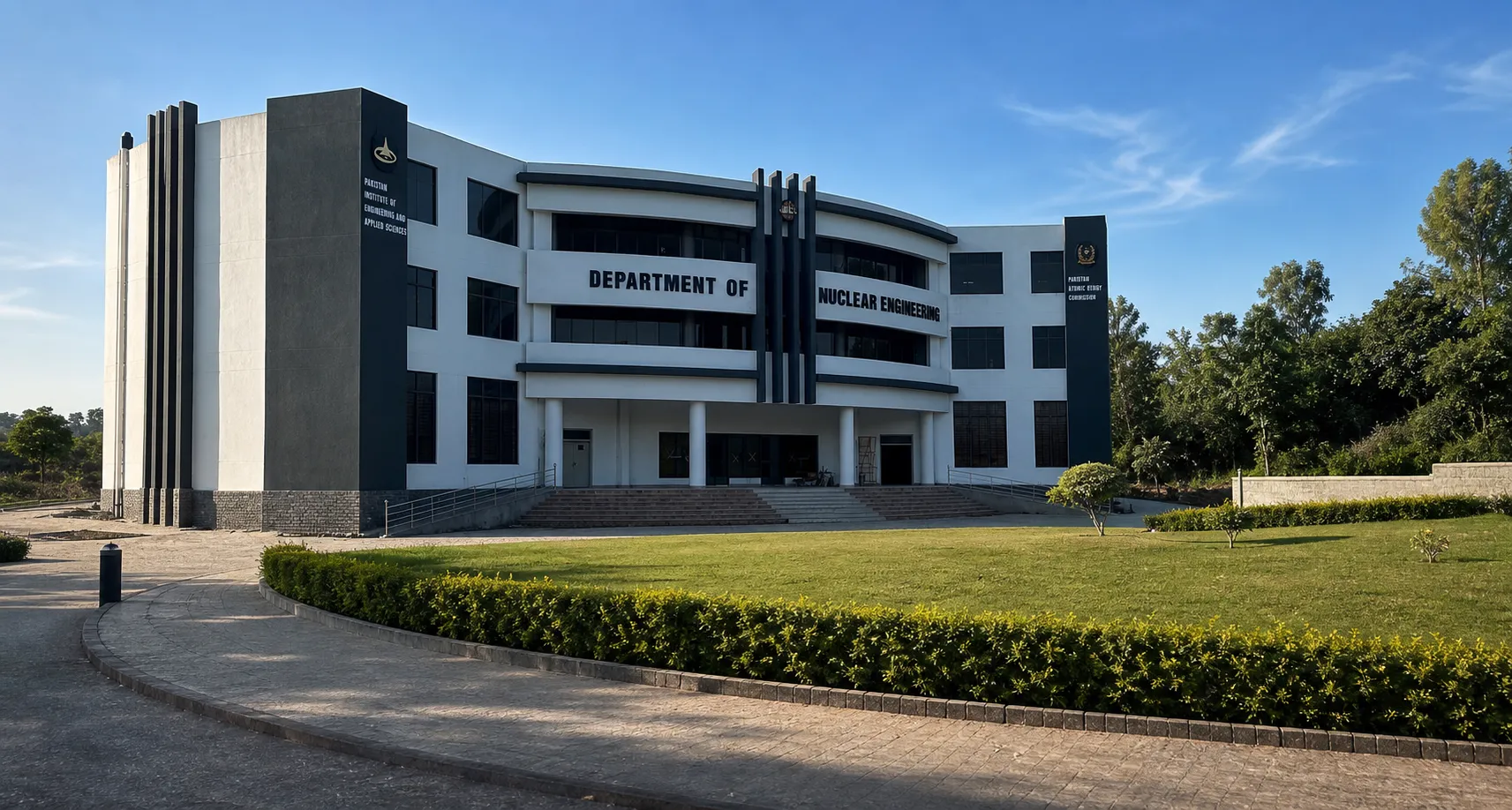

Pakistan’s PIEAS has delivered the country’s most significant university ranking result in years. According to The Nation, the Pakistan Institute of Engineering and Applied Sciences staged a remarkable climb in the QS World University Rankings 2026 — jumping from the 721–730 band in the previous edition to 560th place globally. That is a gain of over 160 positions in a single year, in a ranking system where most universities move 10–20 spots annually.
PIEAS climbing to 560th in the QS Rankings 2026 places Pakistan’s flagship engineering institution in the top 37% of all ranked universities worldwide. That is the most important number to understand.

What Drove PIEAS to 560th in QS Rankings 2026
PIEAS — based in Islamabad and affiliated with the Pakistan Atomic Energy Commission — has consistently outperformed larger Pakistani institutions on the metrics that international ranking systems measure. The QS Rankings 2026 improvement likely reflects advances across four key QS indicators:
Citations per faculty: Research output that is cited by other academics internationally — PIEAS’s specialisation in engineering and applied sciences generates citations that larger, more generalised universities cannot match at the same density.
Faculty-to-student ratio: PIEAS maintains a tight student intake relative to its faculty size — a deliberate policy that improves the QS score while also improving actual educational quality.
Employer reputation: PIEAS graduates are sought by Pakistan’s energy, defence, and engineering sectors. That employer recognition translates directly into the QS employer survey component.
International research collaborations: Partnerships with global institutions in nuclear science, materials engineering, and applied physics generate international co-authored papers — another QS metric that separates research universities from teaching-only institutions.
The QS Rankings 2026 improvement to 560th is not an accident. It is the result of consistent institutional priorities maintained over years.

The Problem the PIEAS Achievement Cannot Hide
PIEAS’s climb to 560th in QS Rankings 2026 is genuinely good news. But it masks a much larger structural failure in Pakistan’s higher education sector.
Pakistan has over 200 universities and degree-awarding institutions recognised by the Higher Education Commission. Of these, fewer than 15 regularly appear in the QS top 1,000. The vast majority are invisible to global ranking systems — meaning their degrees carry less weight in international job markets and academic networks.
The Pakistan budget debate this week revealed that education spending has fallen below 1% of GDP — less than a quarter of UNESCO’s recommended minimum of 4–6%. When you spend that little on education at the national level, having one institution in the QS top 560 is an achievement. Having 200 invisible ones is the predictable result.

Girls’ School Attendance Reaches 57% — Progress With a Warning
Alongside the PIEAS QS Rankings 2026 news, a second education milestone was confirmed. According to The Nation, female school attendance in Pakistan has risen to 57% — an improvement that reflects years of targeted investment in girls’ education programmes.
That 57% figure is progress. It also means 43% of Pakistani girls are still not attending school regularly. In Balochistan and interior Sindh, the figures are significantly lower. Attendance data also does not capture completion rates — dropout rates for girls rise sharply after grade 5 in rural areas, meaning many of the 57% who attend in early years do not complete secondary school.
The direction is positive. The gap is still enormous. And the Pakistan budget debate 2026 has not addressed how to fund the programmes needed to move that 57% to 80% and beyond.

What the PIEAS QS Rankings 2026 Result Means for Pakistani Students
For students considering PIEAS for engineering or applied sciences, the 560th QS ranking matters for two practical reasons. First, it strengthens scholarship applications to international universities — admissions committees recognise QS rankings as a credibility marker. Second, it signals to global employers that an PIEAS degree has been validated against international standards.
For students at other Pakistani universities: push your institution’s leadership to publish research, build international collaborations, and track the QS methodology. The PIEAS QS Rankings 2026 result proves that Pakistani institutions can move dramatically in a single year when they focus on the right metrics. That is replicable — but only with the institutional will and government funding to match.

What Happens Next
The full QS World University Rankings 2026 results for all Pakistani institutions have not been fully tabulated at time of publication. 24PakTimes will publish a complete Pakistan university rankings analysis when the full QS dataset is confirmed.