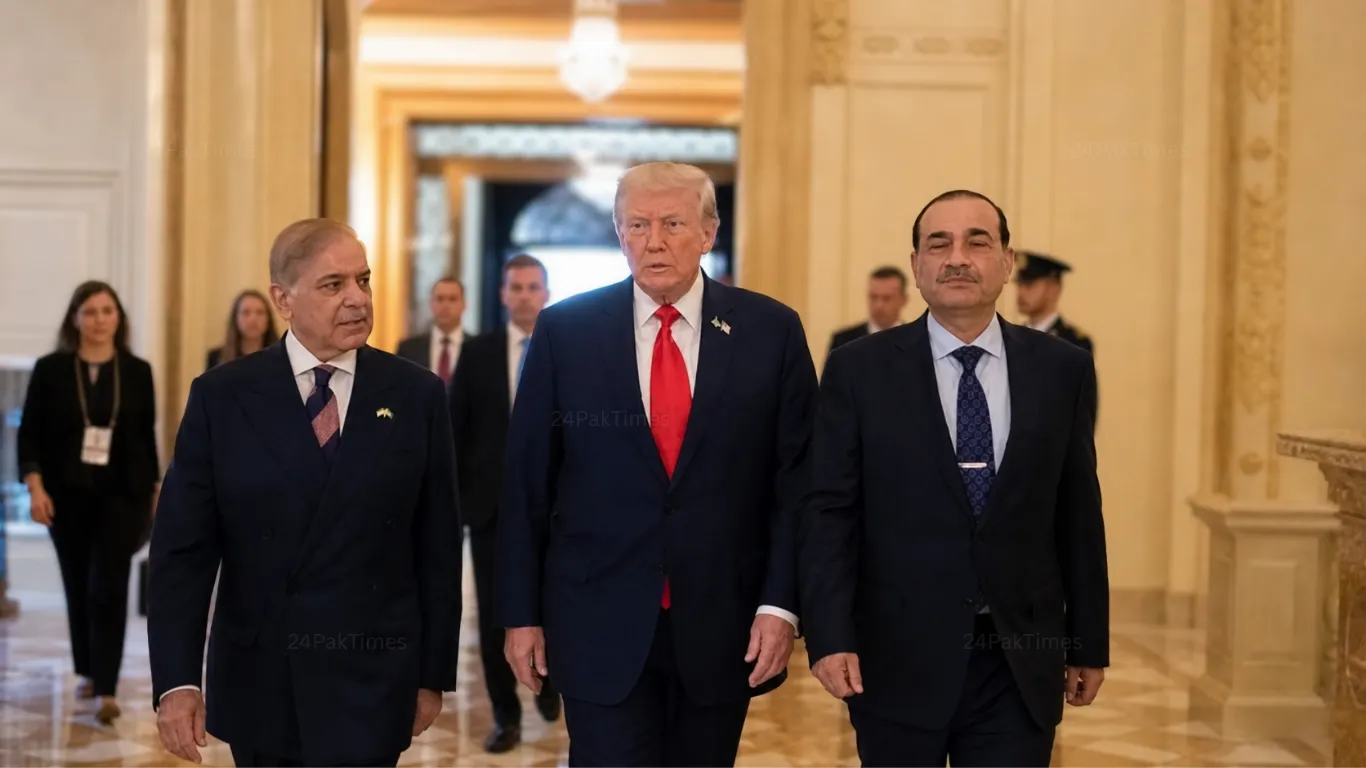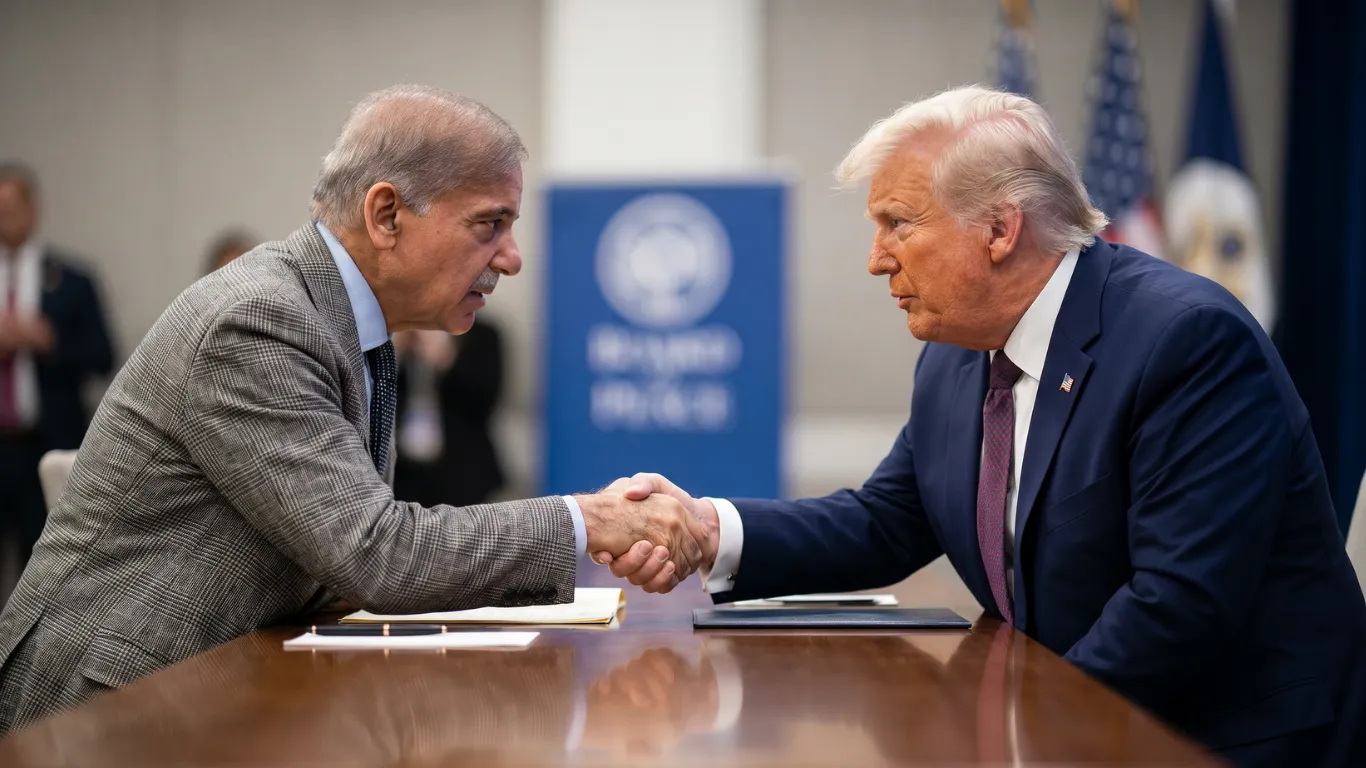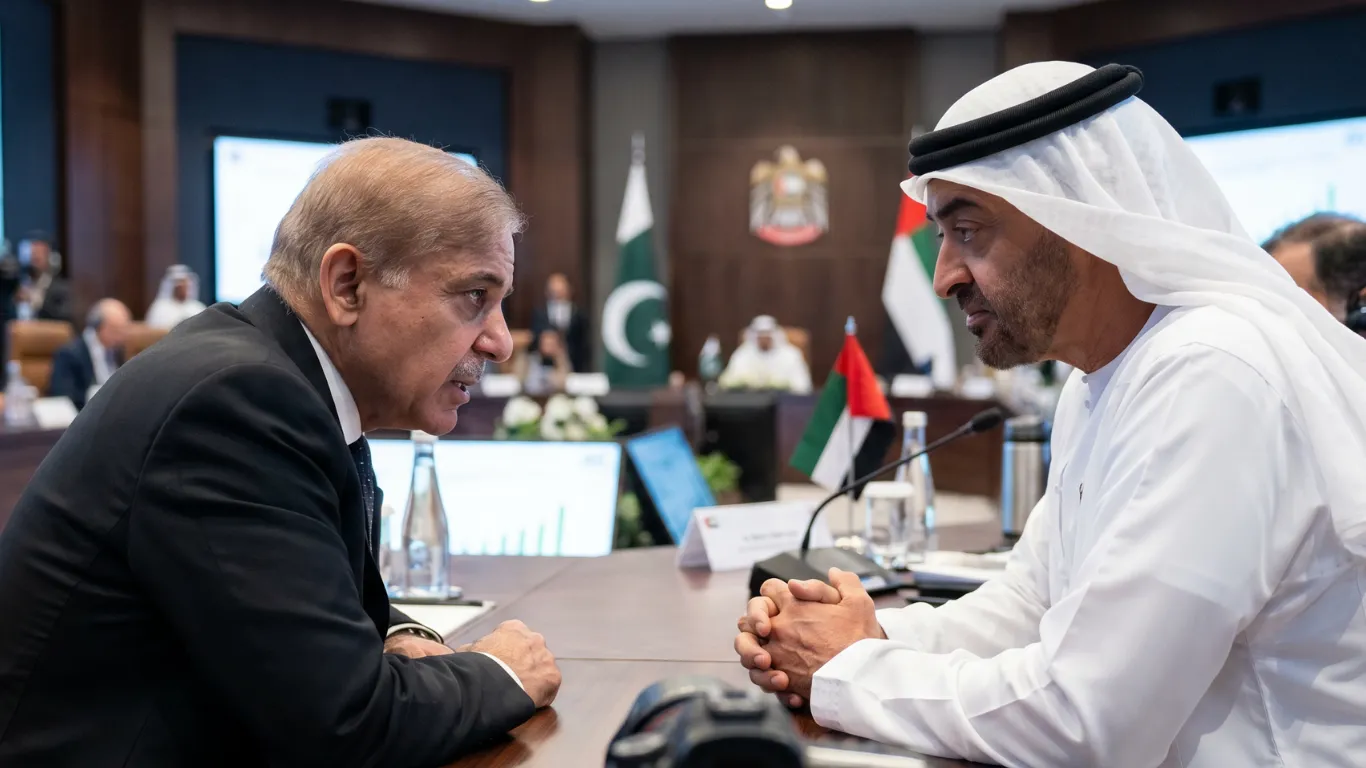
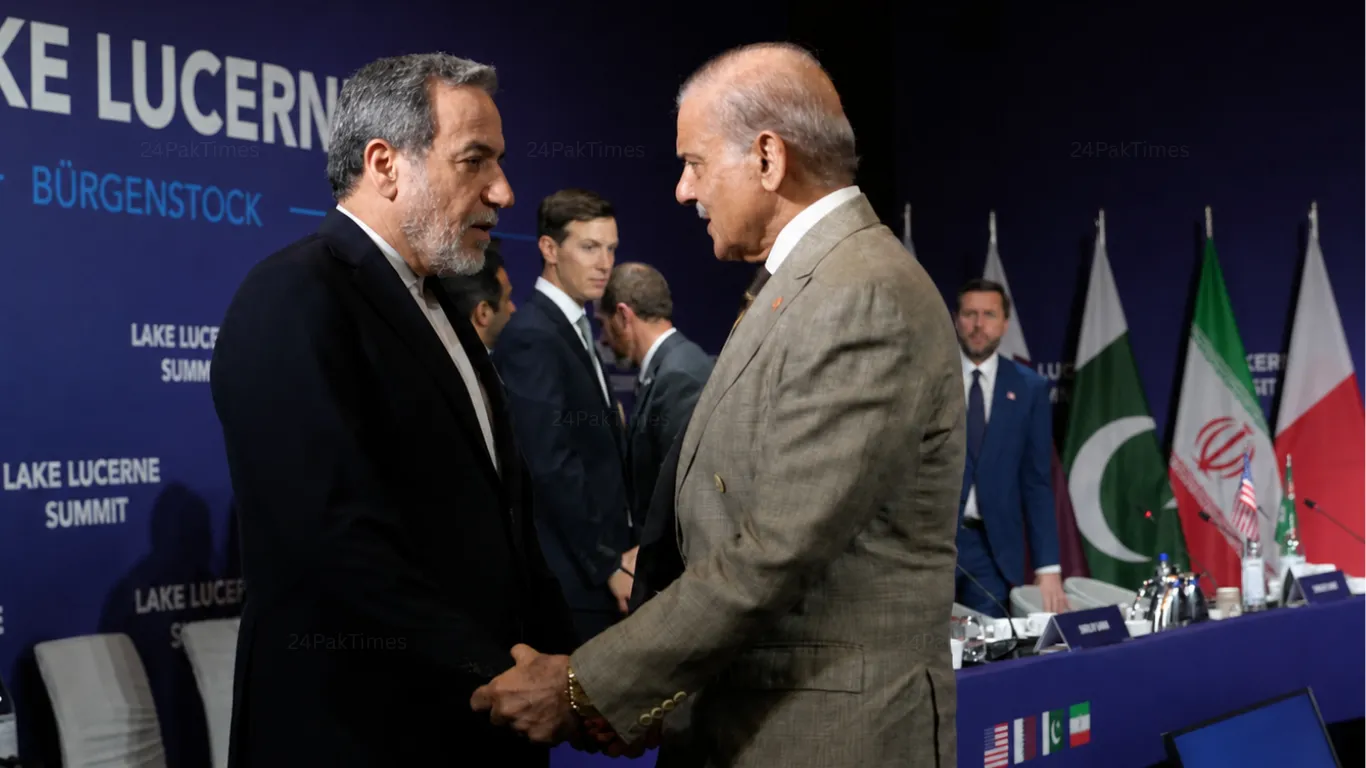

US Iran agreed on a 60-day roadmap to reach a final peace deal after hours of negotiations at the Bürgenstock resort in Switzerland — and the agreement nearly did not happen at all. According to Dawn’s confirmed report, a joint statement issued by mediators Pakistan and Qatar in the early hours of Monday declared that “encouraging progress has been made, including the creation of a mechanism for further technical talks.”
What the joint statement does not say is that the talks nearly collapsed in real time — and that Pakistan’s Interior Minister Mohsin Naqvi personally pulled them back from the edge. More on that below.
The Four Outcomes of the Bürgenstock Talks
According to Yahoo Finance’s confirmed coverage and Fox News’ final round summary, the joint statement confirmed four specific achievements from Sunday’s US Iran Bürgenstock talks:
- 1. A 60-day roadmap to a final deal. Both sides agreed on a structured timeline toward achieving a permanent peace agreement within 60 days — extending the original Islamabad MOU window with a clearer implementation framework.
- 2. A communication line for the Strait of Hormuz. According to CNBC, the sides established a direct communication channel to avoid incidents and miscalculations, with the specific goal of ensuring safe commercial vessel passage through the Strait. This is the most practically significant outcome for Pakistan’s oil supply chain.
- 3. A Lebanon de-confliction cell. The parties agreed to create a joint de-confliction cell involving the US, Iran, and Lebanon to help ensure adherence to the cessation of military operations there — the most contested clause of the original Islamabad MOU 14-point agreement.
- 4. Technical talks continue this week in Switzerland. According to Al Jazeera’s live coverage, technical-level talks will continue through the remainder of the week at Bürgenstock, with Pakistan and Qatar remaining as co-mediators.
What Trump’s Threats Did to the Room
The diplomatic language of the joint statement conceals what actually happened inside Bürgenstock on Sunday. According to MS NOW’s inside reporting, the talks became severely strained after President Trump gave a Fox News interview on Sunday morning in which he threatened Iran directly: “You close it and you won’t have a country. You won’t even make it back to your f—— country. We may take over the strait, if we have to.”
The Iranian delegation — sitting in a Swiss conference room trying to negotiate peace — heard those words in real time. According to MS NOW, a source inside the room said the Iranians were “frustrated” and the first round ended earlier than expected as a direct result of Trump’s comments. Iran’s Parliament Speaker Ghalibaf responded publicly on X: “Don’t they ever think to themselves that if their threats had actually worked, they wouldn’t have reached this level of desperation today?”
The talks were dying. And then Pakistan intervened.
How Pakistan Saved the Bürgenstock Talks
According to MS NOW, Pakistani Interior Minister Mohsin Naqvi held last-ditch meetings with the Iranian delegation after they threatened to walk out. Naqvi had already built a personal relationship with Iranian Foreign Minister Araghchi through his earlier Tehran visit — that trust gave him access no other mediator had in that moment.
The talks were on the edge of collapse. Naqvi’s intervention was not a formal mediation session — it was a direct personal appeal. According to the same report, a senior Pakistani official later confirmed: “The Iranians have come round” and talks would continue. That single line is the moment the US Iran 60-day roadmap was saved. Without it, there would have been no joint statement. No Hormuz communication line. No de-confliction cell.
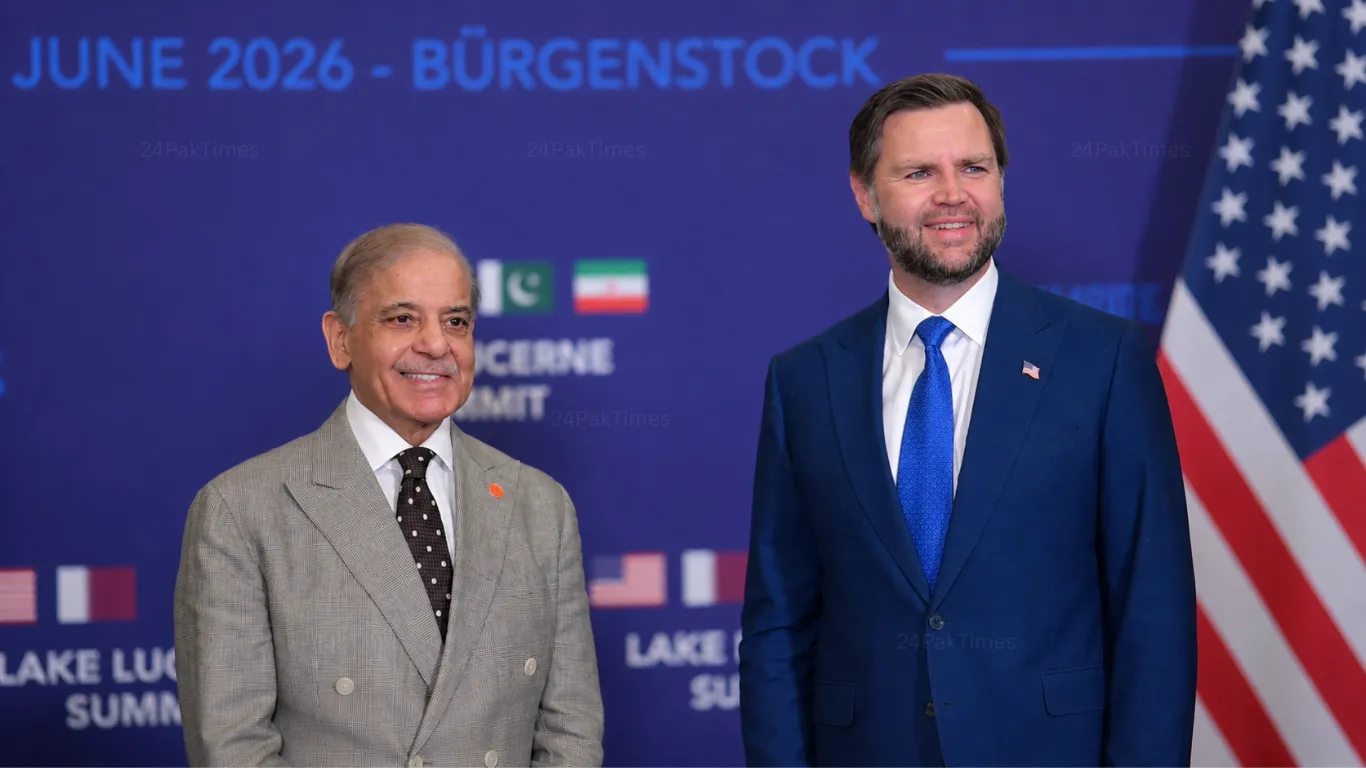
This is the full backstory of how the PM Shehbaz-Vance Bürgenstock meeting produced results rather than another round of collapsed diplomacy.
What US Iran Agree After the Talks
VP Vance was measured but optimistic. According to Fox News, the US delegation called the first round “a productive session” and confirmed technical talks would continue. Vance had told reporters before arriving that he wanted to make progress specifically on the nuclear programme and the Lebanon ceasefire — two of the three core issues.
Iran’s Foreign Minister Araghchi went further. According to Al Jazeera, Araghchi confirmed that sanctions on Iranian oil had been waived and some frozen Iranian assets had been released. He also said a “major reconstruction and development plan for Iran has been launched.” If those claims are accurate, Iran is already receiving tangible MOU benefits — strengthening Tehran’s incentive to stay in the process.
PM Shehbaz at the opening ceremony had expressed confidence: “I think here we are going to have wonderful discussions which will lead to, hopefully, very productive results.” He was right — but by a much narrower margin than that statement implies.
What the 60-Day Roadmap Means for Pakistan
Three direct impacts for every Pakistani. Fuel prices: According to Yahoo Finance, crude oil fell 1.5% to trade below $80 after the positive statement. That keeps the conditions in place for another petrol price cut at the June 26 weekly revision. PSX: The market crashed 2,500 points when Friday’s talks collapsed.
With Sunday’s outcome positive, expect a significant rebound when trading opens this morning. Diplomacy: Pakistan’s role — through Naqvi’s last-minute intervention, Munir’s presence, and PM Shehbaz chairing bilaterals — has been validated in the most direct way possible. Islamabad kept the deal alive when everyone else was ready to walk away.
What Happens Next
The technical talks continue this week at Bürgenstock. Pakistan and Qatar remain as co-mediators. The 60-day countdown to a permanent final deal is now formally confirmed. The next pressure point is the June 26 petrol price revision and whether the Hormuz communication line holds in practice.
24PakTimes will report on every development from the ongoing Switzerland technical talks as they emerge.
FAQ — US Iran 60-Day Roadmap Bürgenstock Talks
What was agreed at the Bürgenstock US-Iran talks?
The US and Iran agreed on four outcomes: a 60-day roadmap toward a final peace deal; a direct communication line to prevent Strait of Hormuz incidents; a Lebanon de-confliction cell involving both parties and Lebanon; and continuation of technical-level talks through the remainder of the week in Switzerland.
How did Trump’s threats nearly collapse the Bürgenstock talks?
During Sunday morning talks, President Trump gave a Fox News interview threatening that Iran “won’t have a country” if it closes the Strait of Hormuz. The Iranian delegation, negotiating in Switzerland at the time, became furious and the first round ended earlier than planned. Pakistan’s Interior Minister Naqvi held emergency meetings with the Iranian delegation to prevent a full walkout.
What role did Pakistan play in saving the Bürgenstock talks?
Interior Minister Mohsin Naqvi held last-ditch meetings with Iran’s delegation after Trump’s threats nearly caused Iran to walk out. Having built personal trust with Foreign Minister Araghchi through earlier Tehran visits, Naqvi persuaded the Iranians to continue. A senior Pakistani official later confirmed “the Iranians have come round” — the moment the talks were saved.
What does the 60-day roadmap outcome mean for Pakistan’s petrol price?
The positive Bürgenstock outcome pushed Brent crude below $80 per barrel — maintaining the conditions for further petrol price reductions. Pakistan’s current petrol price of Rs299.78 per litre could fall further at the June 26 weekly revision if crude stays below $80. A collapse in talks would reverse these gains rapidly.