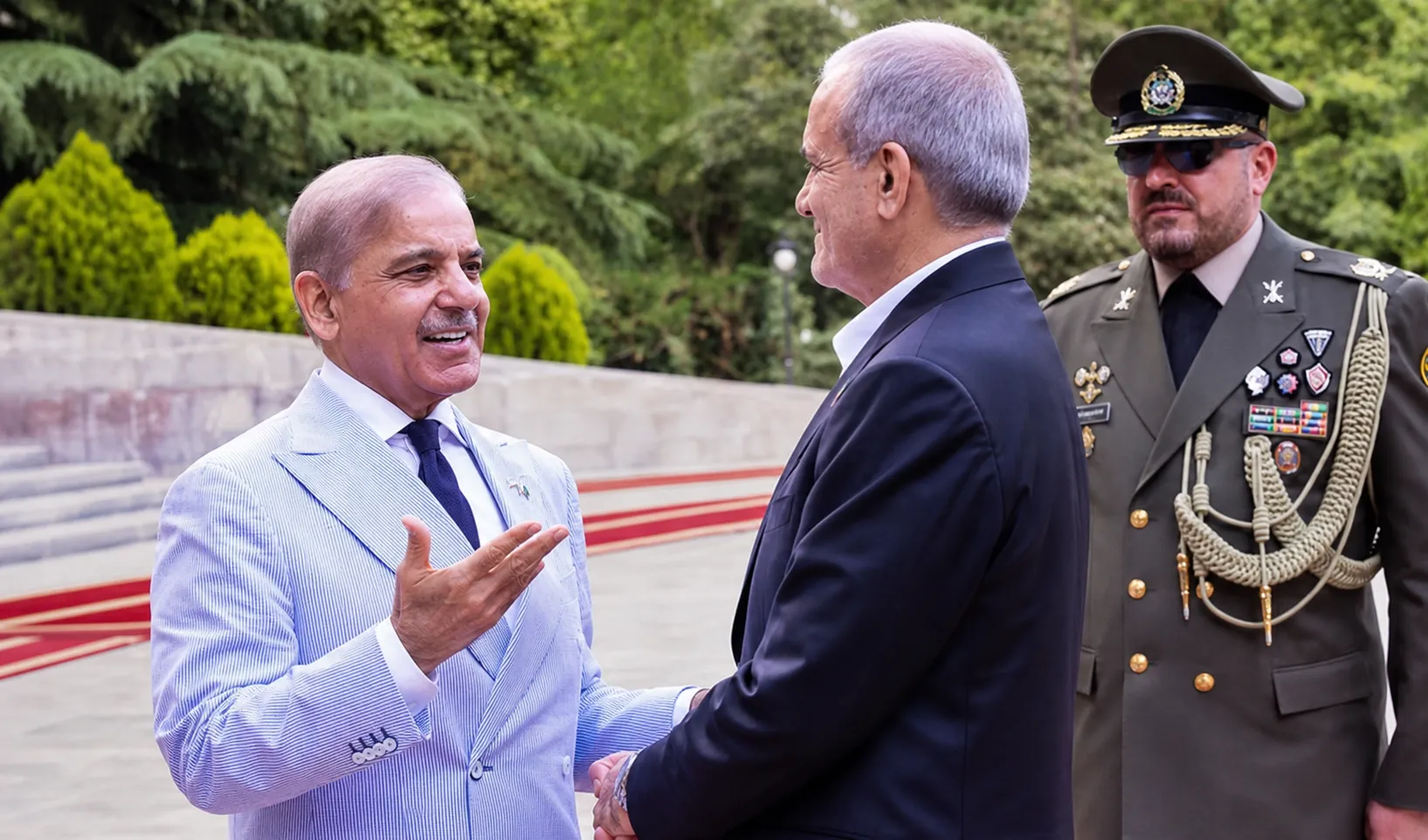

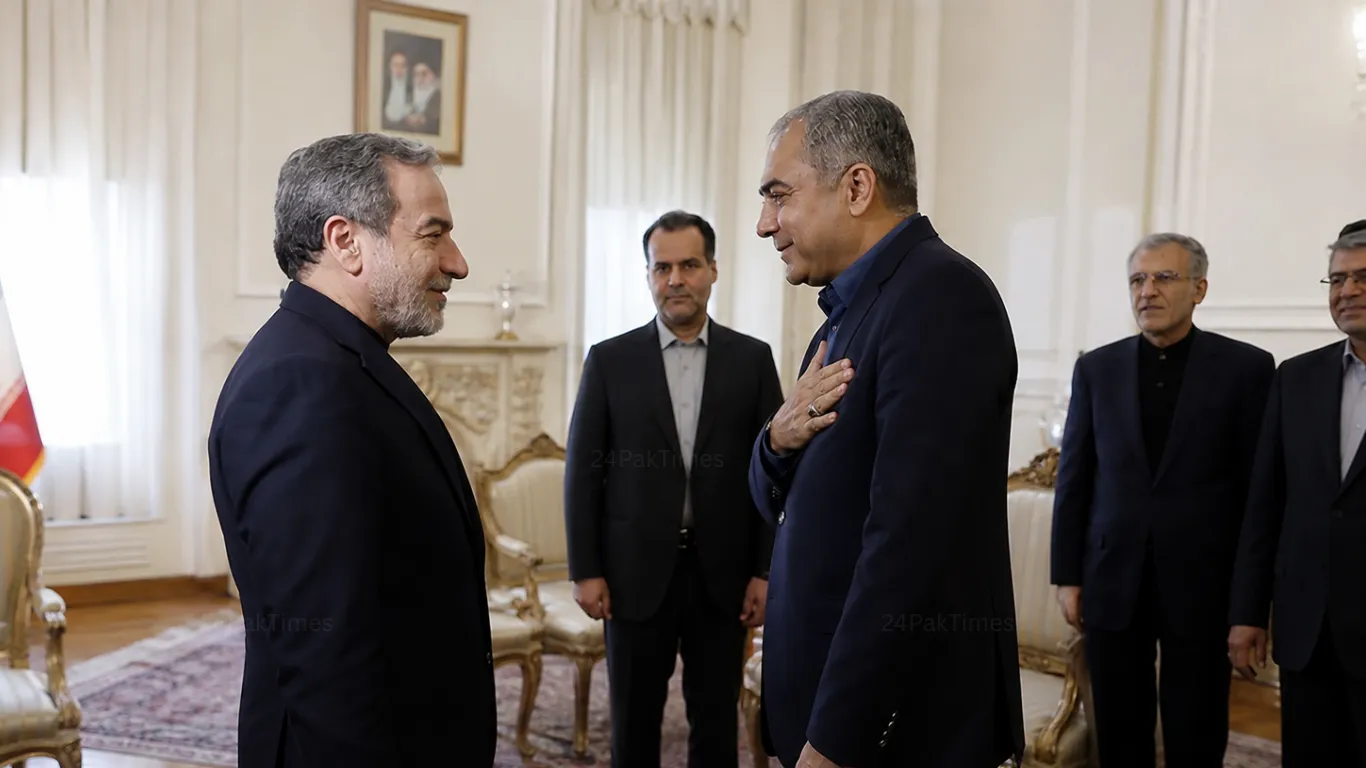
Iranian President Masoud Pezeshkian has landed in Pakistan — and the choice of destination for his first overseas trip since the US-Iran war is not coincidental. According to Al Jazeera, Pezeshkian was received at a military base near Islamabad by President Asif Ali Zardari, Prime Minister Shehbaz Sharif, and Deputy PM and Foreign Minister Ishaq Dar. Television footage showed the Iranian President embracing both leaders as he stepped onto Pakistani soil.
Iran’s President chose Pakistan — not Russia, not China, not any other ally — as his first post-war destination. That decision is a statement more powerful than any press release.
Why Pezeshkian Chose Pakistan for His First Post-War Visit
The symbolism of this trip was established before the aircraft even landed. According to Outlook India’s coverage, President Pezeshkian left Tehran aboard a special aircraft named “Minab 168” — in honour of the 168 students from Minab school who were killed in US strikes on Iran. That naming decision frames this trip exactly as Tehran intends: a wartime leader visiting the nation that helped end the killing.
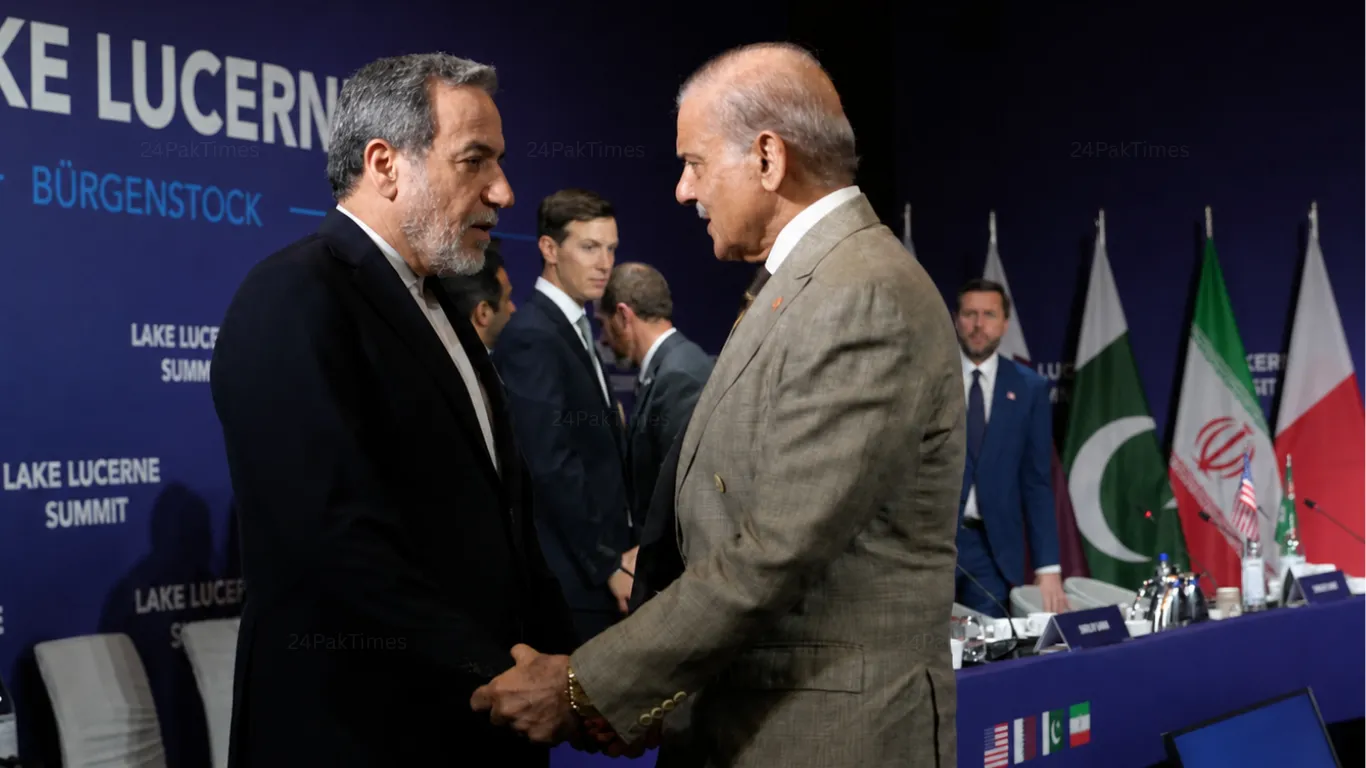
According to Arab News Pakistan, Pezeshkian confirmed his visit is aimed at “expressing appreciation for Islamabad’s role in facilitating the Islamabad Memorandum” and advancing the agreement’s implementation. The Iranian government specifically praised PM Shehbaz Sharif, Field Marshal Asim Munir, Interior Minister Mohsin Naqvi, and the Pakistani government collectively — a list that names every member of the team that kept the Bürgenstock talks alive when they nearly collapsed.
According to The Nation, Iran’s supreme leader also sent personal thanks to Pakistan’s leadership through Pezeshkian’s visit — an extraordinary diplomatic gesture that elevates this trip beyond standard bilateral protocol.
The Full Agenda: Trade, Energy, Border Security, and the MOU
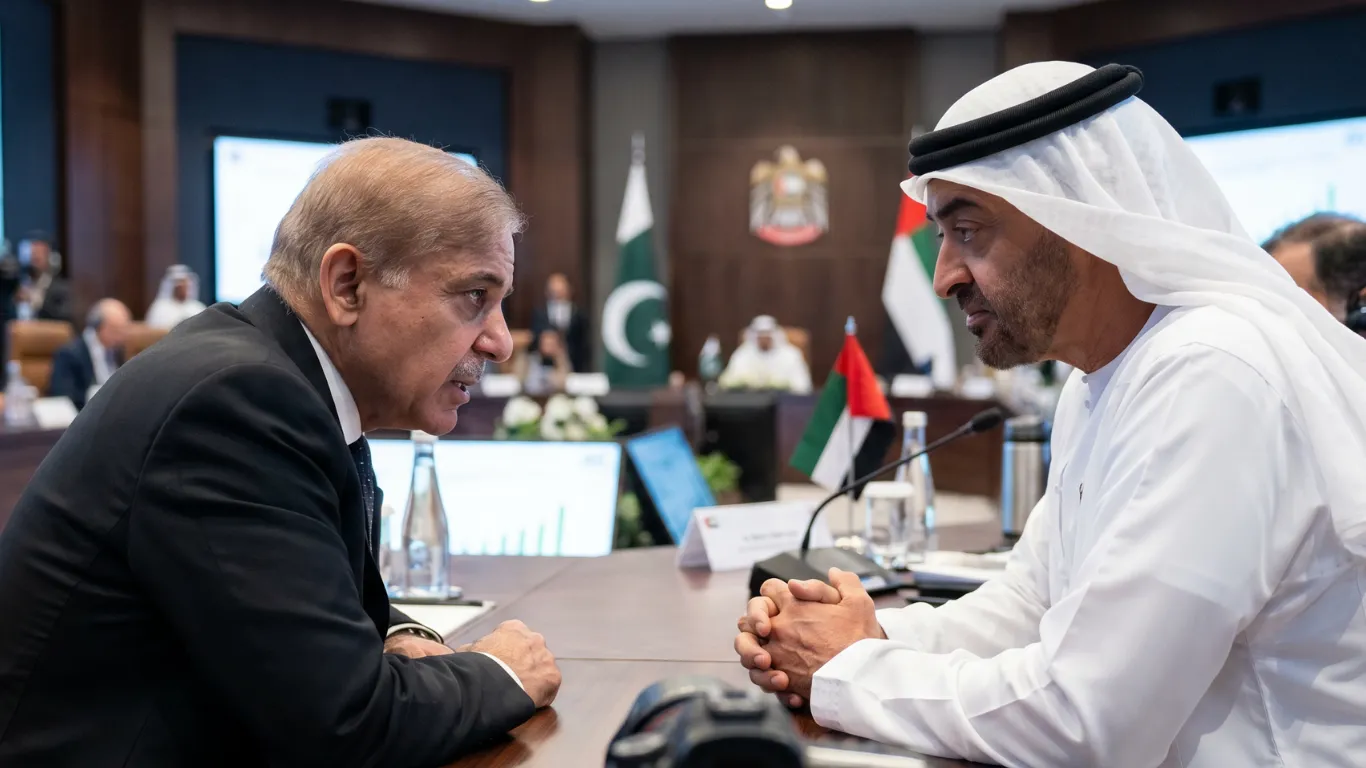
According to Daily Pakistan, Pezeshkian’s meetings in Islamabad will cover the full spectrum of bilateral relations across trade, energy, border security, people-to-people exchanges, and regional connectivity.
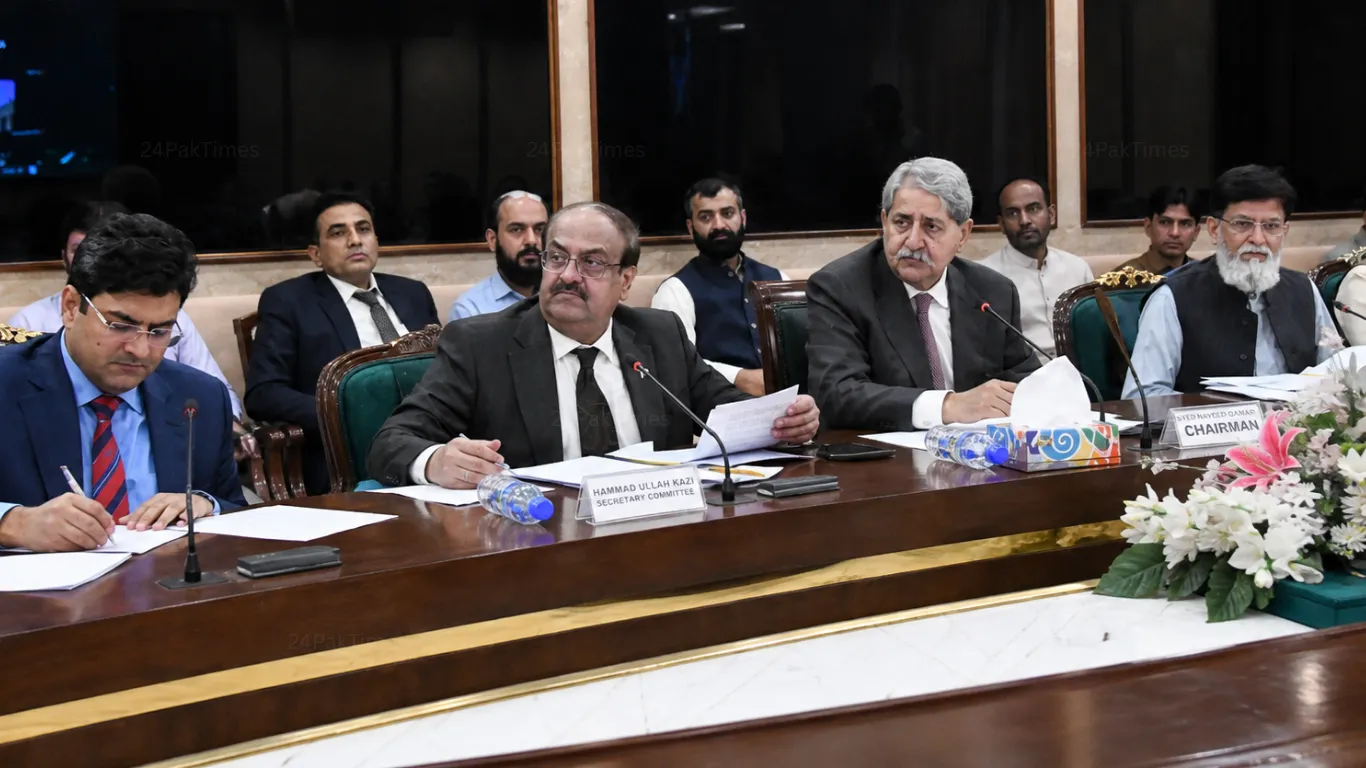
The Iranian President is meeting President Zardari, holding substantive talks with PM Shehbaz, and separately receiving calls from the Chairman of the Senate, the Speaker of the National Assembly, and FM Ishaq Dar. A joint press conference between Pezeshkian and PM Shehbaz is scheduled after their bilateral session — 24PakTimes will report on all announcements from that conference.
For Pakistani readers, two agenda items stand out above all others. First, the Iran-Pakistan gas pipeline — stalled for years under US sanctions pressure — could be formally revived in today’s discussions. With the US Treasury’s 60-day oil sanctions waiver now in effect through August 21, the diplomatic conditions for pipeline progress are better than they have been in over a decade. Second, bilateral trade volumes — currently far below the potential of two neighbouring countries sharing a 960-km border — could see formal targets set for the coming year.

Pezeshkian’s Warning: Implementation Matters More Than Words
Iran’s President arrived in Islamabad with gratitude — and with a clear message. According to Click on Detroit’s reporting, ahead of his Islamabad meetings, Pezeshkian cautioned that “the effectiveness of the talks depends on full commitment to the agreed obligations and their precise implementation.” He added: “Statements outside the agreed text do not help advance the negotiations.”
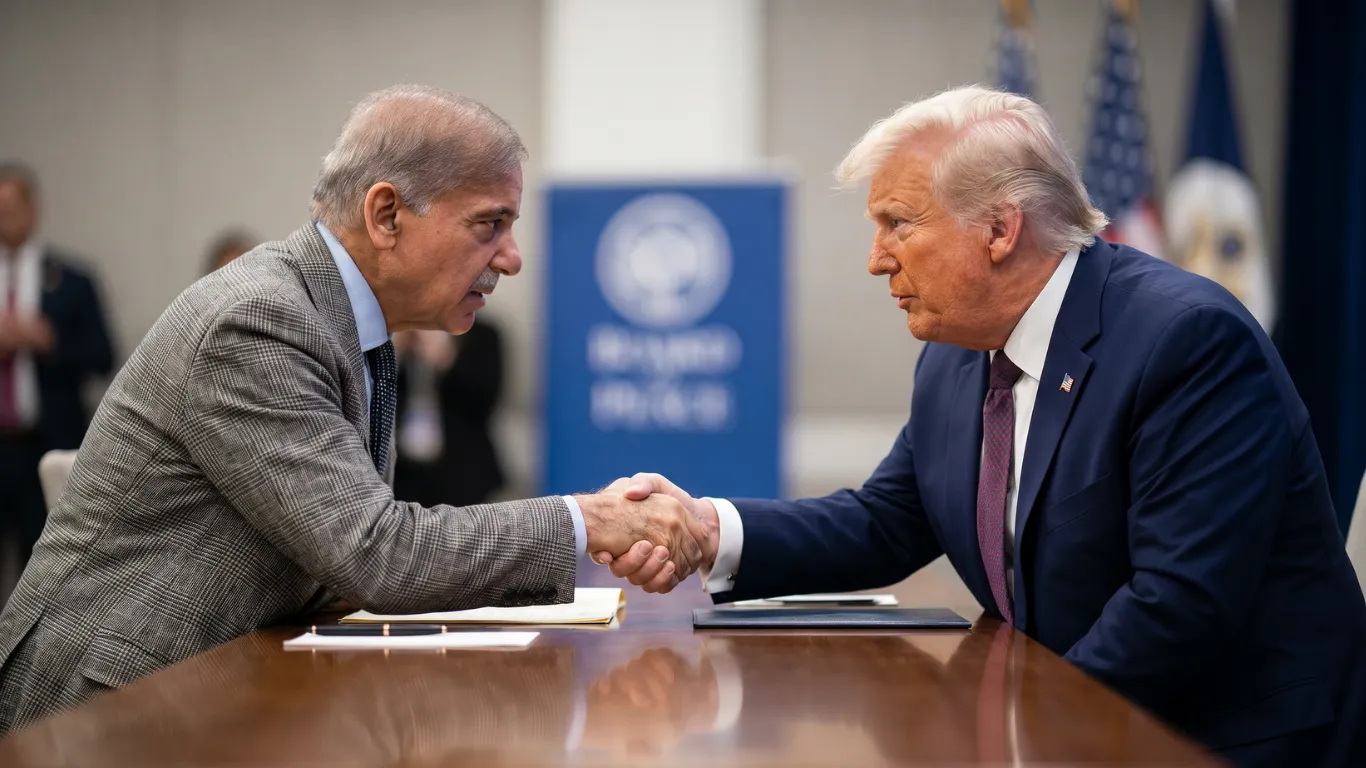
That last phrase — “statements outside the agreed text” — is a direct reference to President Trump’s Fox News threats during the Bürgenstock session, when Trump threatened to “take over” the Strait of Hormuz. Iran is signalling through Pezeshkian’s visit that it wants Pakistan to help anchor Washington to the signed document — not to televised rhetoric. According to Pakistan Observer, Pezeshkian also noted that ongoing technical talks have produced specific negotiation groups covering sanctions relief, nuclear issues, reconstruction, and monitoring — evidence that the Bürgenstock 60-day roadmap is already being operationalised.
What the Sanctions Relief Means for the Visit’s Timing
Iran’s President is arriving at a moment of tangible MOU benefit for Tehran. According to Click on Detroit, the US Treasury Department has issued a 60-day general license allowing Iran to produce, transport, and sell crude oil, petrochemicals, and petroleum products through August 21, 2026. Additionally, as part of the agreement, the US will release $12 billion in frozen Iranian funds.
For Pakistan, the oil waiver is already producing measurable results. The petrol price cut to Rs299.78 was directly linked to falling crude prices following the Islamabad MOU and Bürgenstock outcomes. Pezeshkian’s visit strengthens the bilateral framework that makes continued oil price relief possible.
Islamabad Security Measures Today
According to Arab News Pakistan, authorities have tightened security across Islamabad’s Red Zone ahead of and during Pezeshkian’s visit, restricting heavy traffic and access to government and diplomatic buildings. Islamabad Metro Bus routes face significant closures today. Commuters in the capital should expect delays throughout Tuesday and plan alternative routes.
What Happens Next
Pezeshkian and PM Shehbaz will hold a joint press conference after their bilateral. Any new agreements — on trade, energy, border security, or MOU implementation — will be announced there. 24PakTimes will report live on every announcement from today’s Islamabad meetings.