

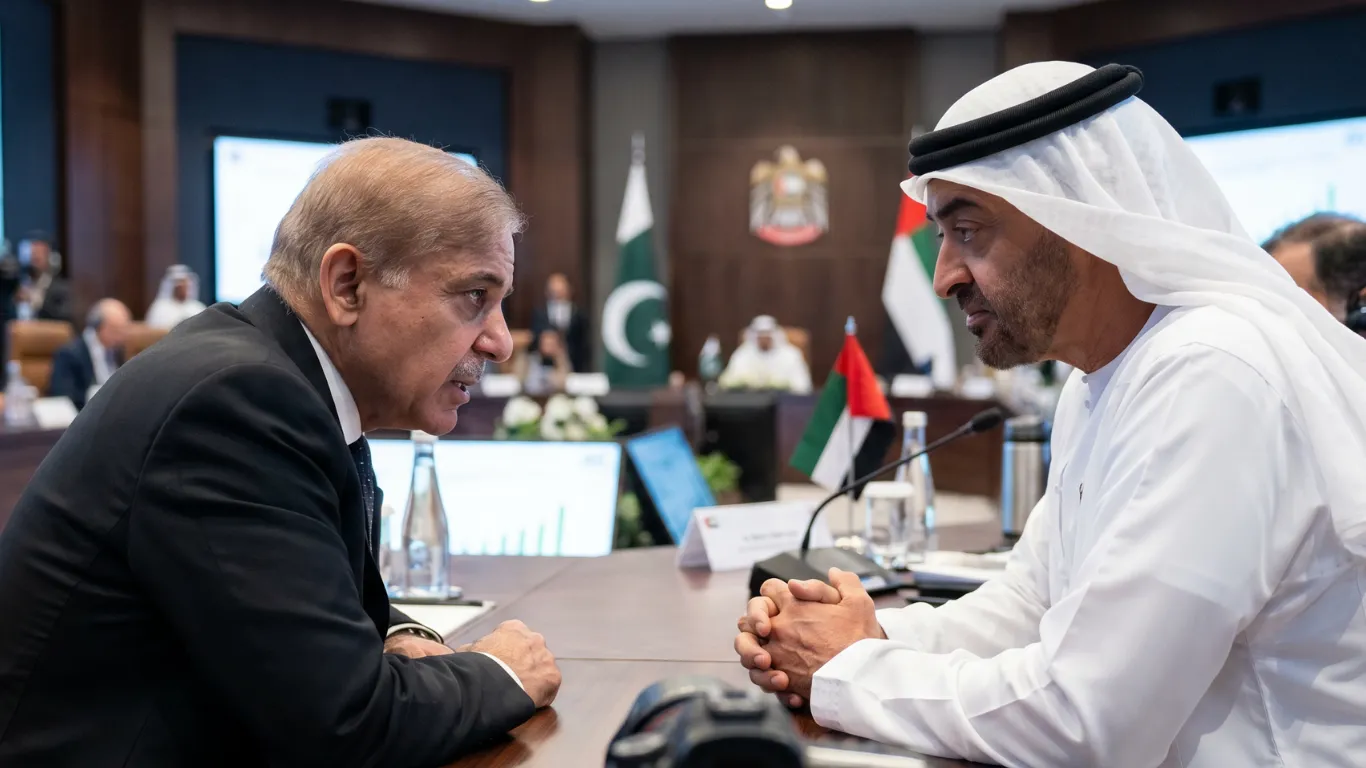

A drone just struck the only nuclear power plant in the Arab world — and the shockwaves go far beyond Abu Dhabi.
According to NPR’s live war coverage, a drone strike sparked a fire on the edge of the United Arab Emirates’ sole nuclear power plant on Sunday in what authorities called an “unprovoked terrorist attack.”
According to WGCU/NPR’s conflict analysis, there were no reported injuries or radiological release. But the fact that a drone reached a $20 billion nuclear facility at all is the real story — and for the 1.7 million Pakistanis living in the UAE, this is not a distant headline. This is home.
Quick Answer: A UAE Barakah nuclear plant drone strike occurred on May 17–18, 2026. No radiation leak confirmed. UAE calls it terrorism. Pakistan diaspora, fuel prices, and Pakistan’s diplomatic role are all directly affected.
What Happened at UAE Barakah Nuclear Plant Today
According to The National’s breaking report, the UAE’s Ministry of Defence confirmed:
- Three drones entered the country from the western border on Sunday
- Two were successfully intercepted by UAE defence systems
- The third drone struck an electrical generator located outside the inner perimeter of the UAE Barakah Nuclear Power Plant in the Al Dhafra Region
- The strike caused a fire which was subsequently brought under control
According to Jerusalem Post’s intelligence sourcing, the drone attack on the UAE nuclear plant was intended to send a deliberate message to the Emiratis — a calculated warning rather than a random strike.
According to WXPR/NPR’s analysis, this is the first time the four-reactor Barakah plant has been targeted in the war. That single fact deserves more attention than any other element of this story.

IAEA Response — Radiation Levels and Official Statement
According to The National’s IAEA update:
“The IAEA has been informed by the UAE that radiation levels at the UAE Barakah nuclear power plant remain normal and no injuries were reported after a drone strike this morning caused a fire in an electrical generator located outside the inner site perimeter of the nuclear power plant.”
The IAEA further confirmed:
- Emergency diesel generators are currently providing power to Unit 3
- The IAEA is following the situation closely and in constant contact with UAE authorities
- The agency is ready to provide assistance if needed
According to Khaleej Times’ emergency report, the UN atomic watchdog expressed “grave concern” over the strike and IAEA Director General Rafael Grossi stated:
“Military activity that threatens nuclear safety is unacceptable.”
No radiation leak. No casualties. But a nuclear power plant was struck by a hostile drone — and the international reaction confirms this is being treated as a serious escalation, not a minor incident.
UAE Calls It a Terrorist Attack — Full Government Response
According to The National’s government response report, Sheikh Abdullah bin Zayed, UAE Deputy Prime Minister and Minister of Foreign Affairs:
- Strongly condemned the attack as a “treacherous terrorist attack”
- Called the strike a breach of international law in a direct call with IAEA Director General Rafael Grossi
- Stressed the UAE’s full right to respond to terrorist attacks
- Asserted UAE’s right to take all necessary measures to protect its security, territorial integrity, and citizens — in accordance with international law
According to Dawn’s conflict coverage, investigations are underway to determine the source of the drone attack — with UAE defence ministry confirming the incident is being treated as a national security matter at the highest level.
According to WFSU/NPR’s regional analysis:
“The UAE and other Gulf states have come under heavy attack from Iran since the war broke out on February 28. A conditional ceasefire agreed between the US and Iran on April 8 led to a halt in hostilities for several weeks, but Tehran resumed strikes on the Emirates this month.”
The April ceasefire is now functionally collapsed.
Why Barakah Matters — The Numbers and Strategic Importance
This is not just any facility. According to WGCU’s nuclear plant profile:
| Barakah Plant Facts | Data |
|---|---|
| Total construction cost | $20 billion |
| Built with partnership of | South Korea |
| Operational since | 2020 |
| Number of reactors | 4 |
| % of UAE electricity supplied | 25% |
| Annual electricity output | 40 terawatt hours |
| Annual CO2 emissions avoided | 22.4 million tons |
| Equivalent car removal from roads | 4.8 million cars |
According to WXPR’s energy analysis, the Barakah plant’s annual output is equivalent to the total annual power demand of Switzerland.
If Barakah goes offline — even temporarily — the UAE faces a serious energy crisis. And when the UAE faces a crisis, every Pakistani worker, business, and remittance sender in the country feels it.

What This Means for Pakistan — Three Direct Impacts
1. Pakistani Diaspora Safety
There are approximately 1.7 million Pakistani nationals living and working in the UAE. Abu Dhabi and the Al Dhafra region — where Barakah is located — host significant Pakistani construction, energy, and service-sector workers.
Any escalation that disrupts UAE’s stability directly affects:
- Pakistani families dependent on Gulf remittances
- Workers on energy and infrastructure contracts near the affected region
- The safety of Pakistani communities in Abu Dhabi and surrounding areas
2. Impact on Pakistan’s Fuel Prices with UAE Barakah nuclear plant attack
According to WFSU/NPR’s Hormuz analysis, tensions continue to rise over the Strait of Hormuz — the vital energy waterway currently under US naval pressure due to the Iran conflict.
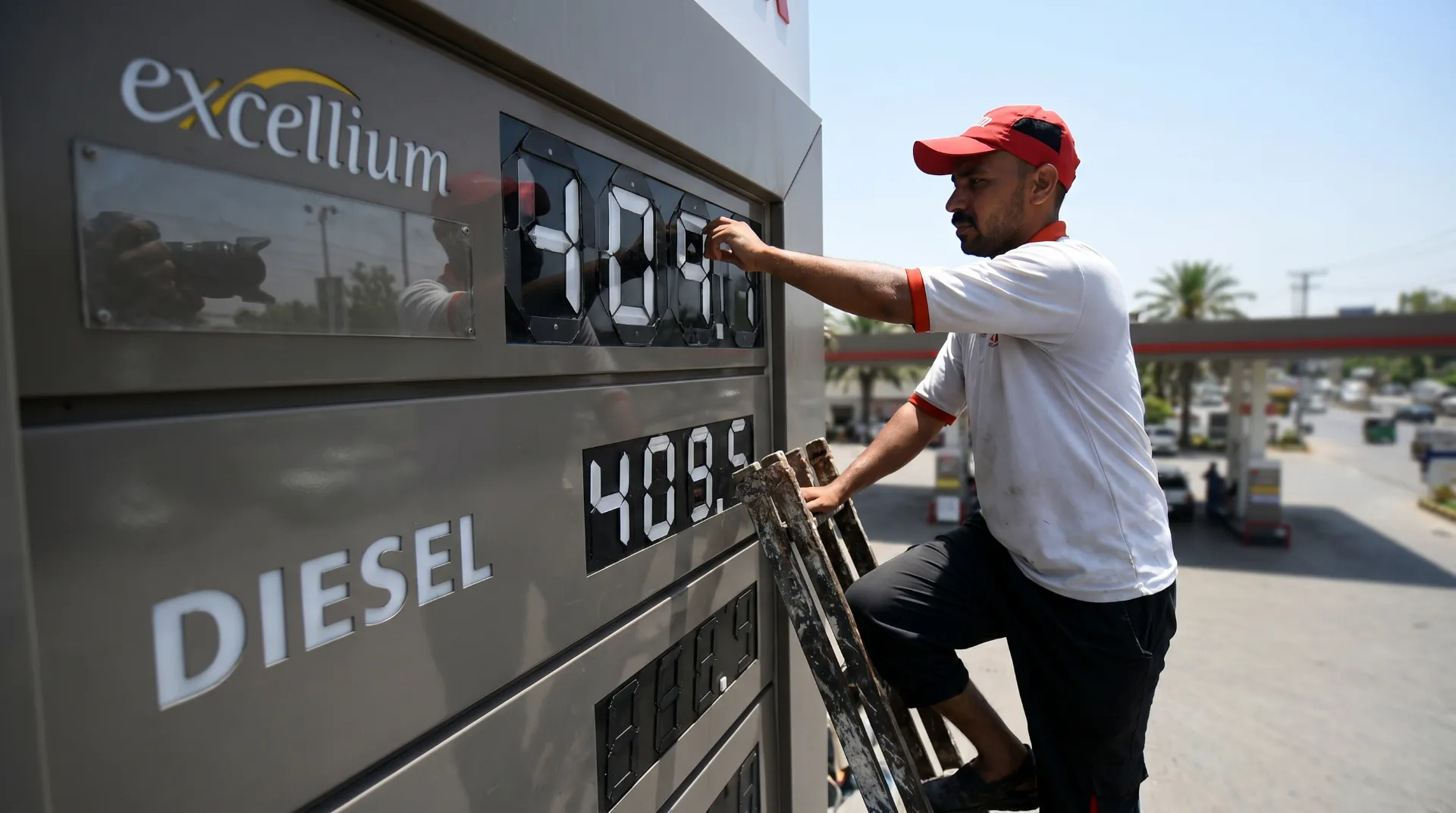
Pakistan imports a significant portion of its oil and LNG through the Strait. If the Hormuz situation deteriorates further after this attack, Pakistan’s current petrol price of Rs409.78 per litre — already elevated after months of crisis hikes — could face renewed upward pressure at the very next fortnightly review.
(For the latest Pakistan fuel prices, read our article: Petrol Price Cut Rs5 Pakistan Today — New Rate Rs409)
3. Pakistan’s Diplomatic Tightrope
Pakistan brokered early ceasefire channels between the US and Iran through back-channel Army diplomacy in April. That ceasefire is now collapsing.
If Iran resumes full-scale operations against the UAE, Pakistan will face enormous diplomatic pressure — particularly from Gulf states that host the largest Pakistani diaspora communities in the world. Islamabad has carefully maintained neutrality. Continued neutrality will become harder to defend if strikes escalate to nuclear infrastructure.

The Bigger Question Nobody Is Asking
According to Dawn’s investigative report, officials have not attributed responsibility — and the reference to a western border raises serious questions about the drone’s launch origin.
According to Khaleej Times’ analysis:
“Although UAE officials did not attribute blame for the attack and no party claimed responsibility yet, the strike near the UAE Barakah Nuclear Power Plant marks a notable development — as it is the first drone-related incident in the country to occur in proximity to a nuclear facility.”
According to WGCU’s historical context report, Yemen’s Iran-backed Houthi rebels previously claimed to have targeted Barakah while it was under construction in 2017 — which Abu Dhabi denied at the time.
Whether this was Iran directly or a proxy matters legally. Strategically, it changes nothing. A nuclear power plant was struck by a hostile drone. The April ceasefire is dead. And the question of who fired next becomes the defining issue of the Gulf war’s next phase.
For further international news context, follow Al Jazeera’s live conflict coverage and CNN World news.



Pingback: WHO Ebola Global Health Emergency 2026 — 88 Dead, No Vaccine, Brutal Truth