
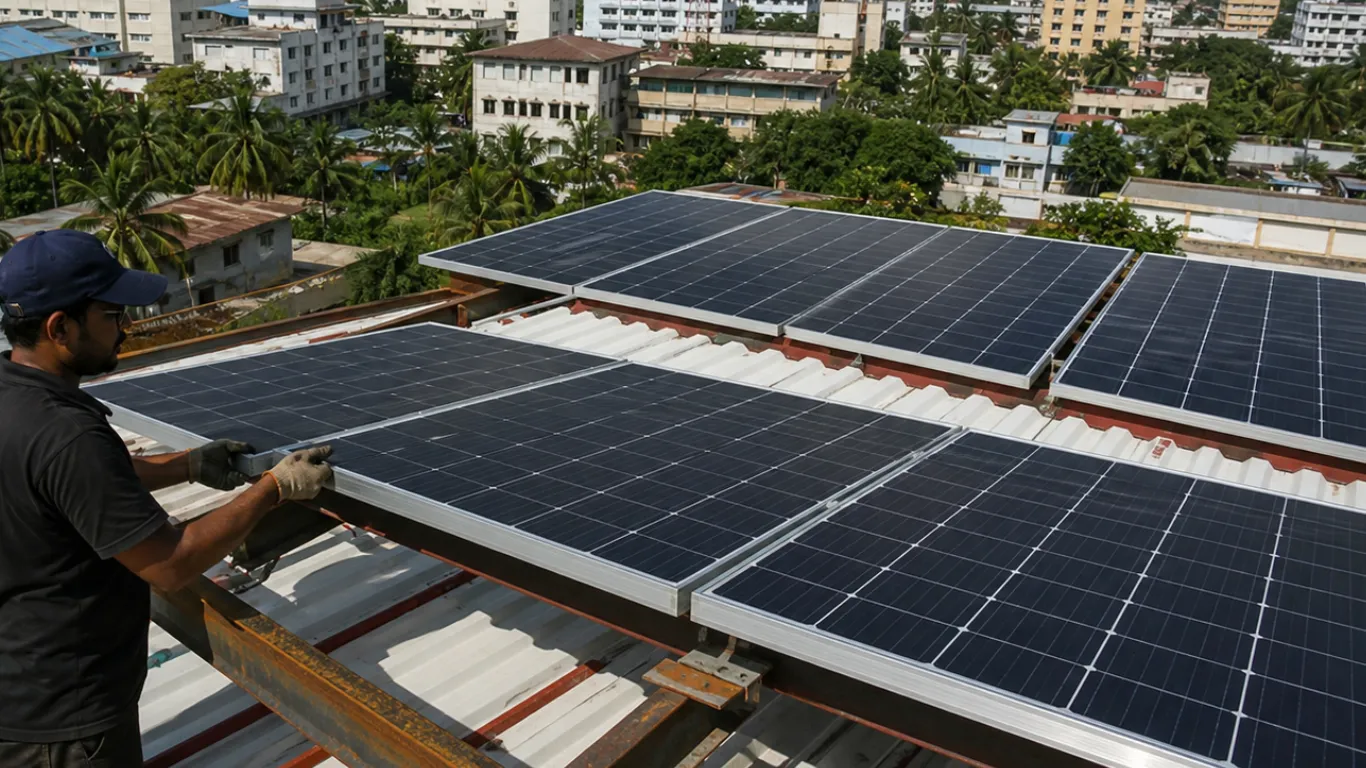

If you have been thinking about installing solar panels on your home, you need to read this before you spend a single rupee. Because the rules changed dramatically in February 2026, and most people have no idea.
On February 9, 2026, NEPRA officially notified the Prosumer Regulations 2026, formally replacing the Net Metering Regulations that had governed rooftop solar since 2015.
In plain language: the old system that let you sell extra electricity back to the grid at full price is gone. The new system pays you much less. And that changes the entire calculation.

What Actually Changed: Net Metering vs Net Billing
Here is the simplest explanation you will find anywhere:
Old system (Net Metering — before February 2026): You send 100 units to the grid. You use 100 units from the grid. Your bill is zero. The units cancelled each other out at the same rate.
New system (Net Billing — after February 2026): You send 100 units to the grid. You get paid only Rs11 per unit. You use 100 units from the grid. You pay Rs40 to Rs50 per unit. Your bill is NOT zero anymore.
Beyond Green Solar’s 2026 policy breakdown confirmed exported solar units are now billed at Rs11 per unit per kWh — significantly lower than before. Feroz Power’s detailed guide added that you buy high and sell low, which makes the financial logic of exporting large surpluses far less attractive than it used to be.

Are Existing Solar Users Protected?
Yes. If you already have solar panels with a net metering agreement, your deal is safe.
Profit by Pakistan Today’s NEPRA report confirmed approvals, licences, and agreements issued under previous regulations will remain valid — ensuring that existing solar users continue under the same terms until expiry of their contracts.
Ayme Solar’s net billing vs net metering comparison confirmed all consumers holding valid net metering agreements as of February 9, 2026 will continue operating under the old one-to-one billing terms until their existing contracts naturally expire.
So if you installed solar before February 9, 2026, relax. Your deal stays the same until your contract ends. But if you expand your system, that expansion falls under the new rules.

So Is Solar Still Worth It in 2026?
Yes. But for a different reason than before.
CNC Electric’s 2026 net metering guide confirmed the reduced export rate means self-consumption is now more valuable than ever. Every unit you consume directly saves you Rs22 to Rs27. Every unit you export earns you only Rs11 to Rs13.
The new strategy is simple: use your own solar electricity during the day instead of sending it to the grid.
Run your ACs, water pumps, washing machine, and iron during daylight hours when your panels are producing. The more of your own electricity you use, the more you save. Exporting is no longer the game. Self-consumption is.
CNC Electric confirmed that even under the new net billing regime, payback periods stay in the 3.5 to 4.5 year band because panel prices have fallen faster than export rates were cut. The systems that pay back fastest in 2026 are sized for maximum daytime self-consumption, not export.

The Numbers: What Does Solar Actually Cost vs Save?
| System Size | Approximate Cost | Monthly Savings (Self-Use) | Payback Period |
|---|---|---|---|
| 5 kW | Rs500,000 – Rs650,000 | Rs15,000 – Rs25,000 | 3.5 to 4.5 years |
| 10 kW | Rs900,000 – Rs1,200,000 | Rs30,000 – Rs50,000 | 3 to 4 years |
| 15 kW | Rs1,300,000 – Rs1,800,000 | Rs45,000 – Rs70,000 | 3 to 4 years |
Note: Savings assume maximum daytime self-consumption. Systems with heavy export will have longer payback periods.

Why NEPRA Made This Change
Express Tribune’s NEPRA regulations report confirmed regulators argued net metering produced a regressive outcome — shifting fixed system costs like capacity payments and grid maintenance onto non-solar users as wealthier households cut their billed consumption.
Power Division projections showed that without reform, lost grid sales could reach 18.8 billion units by FY2034, with a cumulative impact of Rs545 billion — potentially lifting tariffs by Rs5 to Rs6 per unit for everyone.
In simple terms: every time a wealthy household with solar panels stopped buying electricity from the grid, the grid’s fixed costs got pushed onto everyone else. People without solar ended up subsidising people with solar. NEPRA’s argument is that this was unfair.

My Honest Advice
If you are paying Rs15,000+ per month in electricity bills and your house has a south-facing roof with good sunlight, solar is still one of the smartest investments you can make in Pakistan in 2026.
But size your system for what you actually use during the day. Do not install 15 kW if your daytime usage is only 5 kW. The days of installing oversized systems and making money by exporting are over.
And get at least 3 quotes from AEDB-registered installers before signing anything. Prices vary by Rs100,000 to Rs200,000 for the same system depending on the installer.
This story is connected to the broader heatwave Pakistan is experiencing right now — as we reported in our Pakistan Heatwave Alert June 2026, AC usage is surging and solar self-consumption makes more financial sense during peak summer months than at any other time of year.