

The WHO Ebola global health emergency 2026 is now officially declared — and this outbreak is different from every Ebola crisis before it.
According to NBC News, WHO Director-General Tedros Adhanom Ghebreyesus declared the Ebola disease outbreak in Congo and Uganda a Public Health Emergency of International Concern (PHEIC) after more than 300 suspected cases and 88 deaths.
Here is the part that changes everything about this crisis compared to previous Ebola outbreaks. According to WHO’s official disease outbreak notice:
“Unlike Ebola virus disease, there is no licensed vaccine or specific therapeutics against BDBV.”
No approved vaccine. No proven treatment. An outbreak already spreading across borders.
I covered the 2014 Ebola crisis and Pakistan’s response to it — when airports scrambled to set up thermal screening and the public panicked over something happening thousands of kilometres away. Today’s declaration is a reminder that global health emergencies don’t respect borders. And with millions of Pakistanis working in the Gulf, Africa, and connected through international travel, the WHO Ebola global health emergency 2026 matters here too.
What WHO Ebola Global Health Emergency 2026 Actually Means
According to United Nations News:
“The World Health Organization has declared the ongoing Ebola outbreak in the Democratic Republic of the Congo and Uganda a Public Health Emergency of International Concern, citing rising cases, cross-border spread and significant uncertainties about the scale of the epidemic.”
According to Al Jazeera’s WHO emergency explainer, the declaration follows confirmed and suspected infections linked to the Bundibugyo strain of the virus, evidence of cross-border transmission from DRC into Uganda, and significant uncertainties about the true scale of spread.
A PHEIC is the WHO’s formal mechanism to tell every country on earth: pay attention, prepare now, do not wait for this to reach your borders. It is the same alert level used at the start of COVID-19.
According to UN News, this does not currently meet criteria for a pandemic emergency under WHO’s International Health Regulations — but that distinction can change rapidly if containment fails.
The Numbers — WHO Ebola Global Health Emergency 2026 Death Toll
According to UN News, as of May 16, 2026, health authorities had recorded eight laboratory-confirmed cases, 246 suspected cases and 80 suspected deaths in Ituri Province in eastern DRC.
Cases have also been confirmed in the capital, Kinshasa, and across the border in Uganda, where two infected individuals travelled from DRC and were admitted to intensive care.
According to NPR, there are 10 confirmed cases, 336 suspected cases including 88 deaths in the DRC and two confirmed cases including one death in neighboring Uganda, according to the U.S. Centers for Disease Control and Prevention.
The real concern is what WHO warned — that the outbreak is likely larger than currently detected, pointing to clusters of unexplained deaths, a high positivity rate among tested samples, and limited understanding of transmission patterns.
Why the WHO Ebola Global Health Emergency 2026 Bundibugyo Strain Is Different
According to WHO’s official outbreak notice:
There is no licensed vaccine or specific therapeutics against BDBV.
Every major Ebola response since 2014 has relied on the rVSV-ZEBOV vaccine and experimental monoclonal antibody treatments. Those tools do not work against the Bundibugyo strain. They were developed for the Zaire strain of Ebola.
According to CNN’s outbreak explainer, the fatality rate involving the Bundibugyo strain is estimated to be between 25 and 40%, according to medical care organization Doctors Without Borders.
According to Al Jazeera, although more than 20 Ebola outbreaks have taken place in Congo and Uganda, this is only the third time the Bundibugyo virus has been reported. Standard rapid field tests often miss it — meaning the true case count is likely significantly higher than confirmed numbers suggest.
How the WHO Ebola Global Health Emergency 2026 Outbreak Started
According to WHO’s Disease Outbreak Notice, on May 5, 2026, WHO was alerted of a high-mortality outbreak of unknown illness in Mongbwalu Health Zone, Ituri Province, DRC — including deaths among health workers.
According to NPR’s investigative report, health officials believe the outbreak started in late April. Cases have been mostly detected in two mining towns — Mongbwalu and Rwampara — where many people come and go for work.
Infectious disease physician Boghuma Titanji from Emory University told NPR:
“We know that transmission and community spread of the virus was probably happening for weeks before this was recognized.”
Weeks of undetected spread in a high-mobility mining region connected to Uganda, South Sudan, and beyond. That is how a contained local outbreak becomes a cross-border emergency.
According to Washington Post’s outbreak timeline, cross-border movement to Uganda occurred before isolation protocols were in place — making containment significantly more complex than a single-country response.
What Pakistan Needs to Know About WHO Ebola Global Health Emergency 2026
Here is the specific Pakistan connection — and it is closer than most people think.
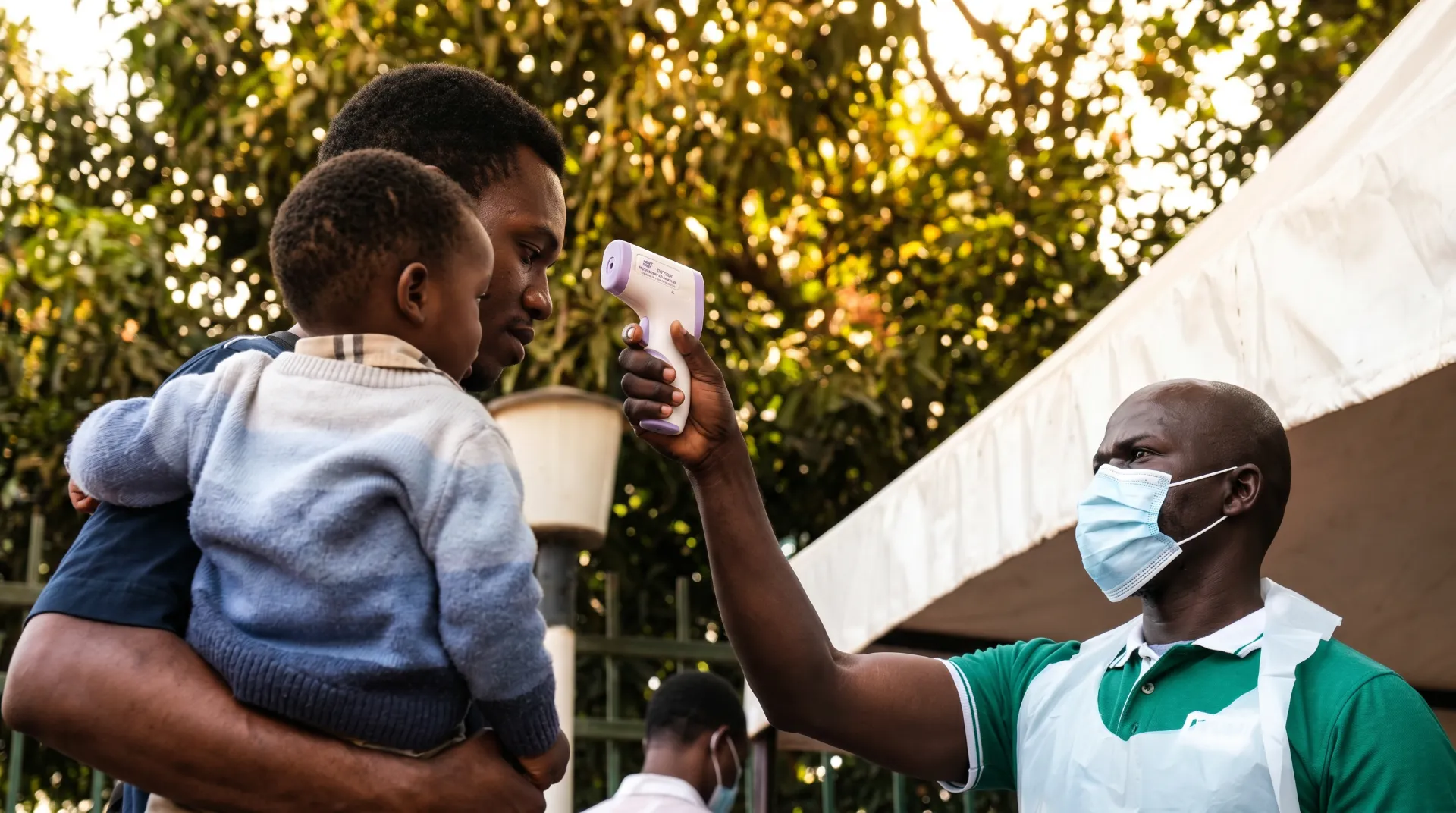
- Airport Screening: During the 2014 Ebola crisis, Pakistan implemented thermal screening at Karachi, Lahore, and Islamabad airports. If the WHO Ebola global health emergency 2026 continues to escalate, expect Pakistan’s National Health Services to reimpose those protocols.
- Pakistani Workers in Africa: Pakistani communities exist in several African nations with trade links to DRC and East Africa. Workers in construction, logistics, and services sectors in East and Central Africa need to follow WHO guidance immediately.
- WHO Funding Gap: The US officially withdrew from WHO earlier in 2026 — meaning this Ebola global emergency response is happening with reduced American funding. Vaccine development will take longer without US government backing.
- Lessons from COVID: Pakistan’s public health system struggled with COVID-19 coordination. If Ebola reaches South Asian airspace as isolated cases — through returning workers or travellers — Pakistan’s response infrastructure will face a genuine test.
According to UN News, WHO does not recommend restrictions on international travel or trade. Instead, it urged countries to strengthen surveillance, preparedness and community engagement, while ensuring accurate public information.
For more on Pakistan’s health infrastructure challenges, read our full analysis: Pakistan Child Health Crisis 2026 — The Data Is Brutal.

The Honest Assessment
According to Al Jazeera:
“The ongoing insecurity, humanitarian crisis, high population mobility, the urban or semi-urban nature of the current hotspot and the large network of informal healthcare facilities further compound the risk of spread.”
According to The New Daily, Ebola has killed about 15,000 people since it was discovered — almost all in Africa. This outbreak is still in its early stages. But the combination of no vaccine, weeks of undetected spread, conflict zone geography, and high population mobility makes it genuinely more dangerous than most Ebola emergencies in recent memory.
Pakistan may be far from Congo. But in a connected world with millions of Pakistanis travelling globally, “far” doesn’t mean “safe.” It means “not yet.”
Stay informed through WHO’s official updates and Pakistan’s NHSRC official channels. Ignore social media panic. Watch verified sources only.

Also read our related coverage: UAE Barakah Nuclear Plant Drone Strike — What It Means for Pakistan