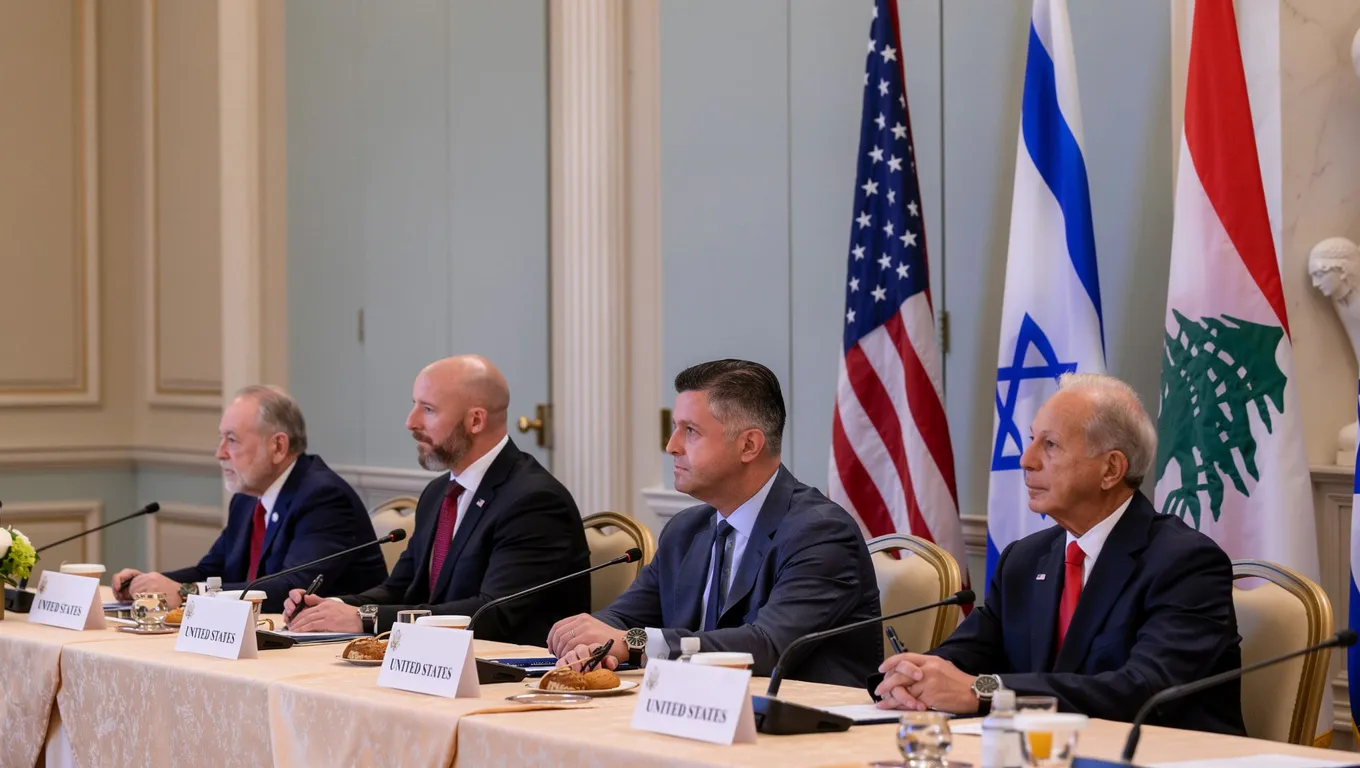

Nine hours of talks produced the most significant progress the Israel-Lebanon conflict has seen in weeks — but the word “ceasefire framework” requires specific demands.
Israel and Lebanon agreed to “the implementation of a ceasefire,” contingent on “a complete cessation” of Hezbollah fire and removal of all Hezbollah operatives from southern Lebanon. The agreement came after Wednesday’s US-mediated session at the State Department — following a full day of talks on Tuesday. Both sides agreed to reconvene for political and security track discussions the week of June 22.
CNN’s Iran-Israel-Lebanon live coverage confirmed the framework. Al Jazeera’s Iran war live blog provided the running update on the ceasefire agreement alongside continued military activity.
Why the Lebanon Ceasefire Matters for the Iran Deal
Lebanon has become the central sticking point blocking the larger US-Iran deal.
ABC News confirmed that Tehran insists any larger truce must also quell the fighting in Lebanon — since Hezbollah is Iran’s primary regional ally. Every Israeli strike on Lebanon gives Iran a stated reason to refuse signing the 60-day MoU that Pakistan has been working to broker.
A functional Israel Lebanon ceasefire implementation — with genuine Hezbollah withdrawal from the south — could unlock the Iran deal. That is the connection that makes these talks matter beyond Lebanon’s borders.
Wikipedia’s 2026 Iran war record confirmed the ongoing ceasefire has seen repeated violations as Israel and Hezbollah have continued trading strikes. Whether this new framework changes that pattern is the central question for the coming week.
The Lebanon War in Numbers
Since fighting resumed on March 2, the humanitarian toll has been extraordinary:
- Over 3,400 people killed in Israeli strikes on Lebanon
- Over 10,000 wounded
- Over 1 million displaced — more than 20% of Lebanon’s entire population
- Israeli buffer zone established approximately 10km deep into southern Lebanon
- Lebanese army soldiers killed in strikes targeting military personnel
Our earlier Israel Lebanon coverage documented the capture of Beaufort Castle and Netanyahu’s declaration of “a dramatic change” in the invasion — the expansion that accelerated pressure for today’s ceasefire framework talks.
What This Means for Pakistan
The Israel Lebanon ceasefire framework has three direct implications for Pakistani households:
Oil and Energy: A working ceasefire in both Lebanon and Iran would stabilize global energy markets. Pakistan’s petrol prices, LNG imports, and electricity costs are all linked to Middle East stability. With the Budget 2026-27 delayed to June 10, the Finance Minister’s fuel pricing decisions will reflect whatever happens in the next week of negotiations.
Hajj Pilgrims: Over 179,000 Pakistani Hajj pilgrims are in Saudi Arabia. A de-escalation across the region reduces the broader security risk for families who have sent loved ones to perform the pilgrimage.
PSX and Gold: The Pakistan Stock Exchange and gold prices have tracked Middle East war news closely for three months. A comprehensive ceasefire — if it holds — could trigger a PSX rally and push gold below Rs460,000.
What Happens Next
The next round of Israel-Lebanon talks is scheduled for the week of June 22. In the interim, both sides must demonstrate compliance with the ceasefire framework.
Whether Hezbollah withdraws from southern Lebanon as required — and whether Israel halts its strikes during that process — will determine if this framework survives its first week.
24PakTimes will continue monitoring the Israel Lebanon ceasefire and its connection to the broader Iran deal negotiations.