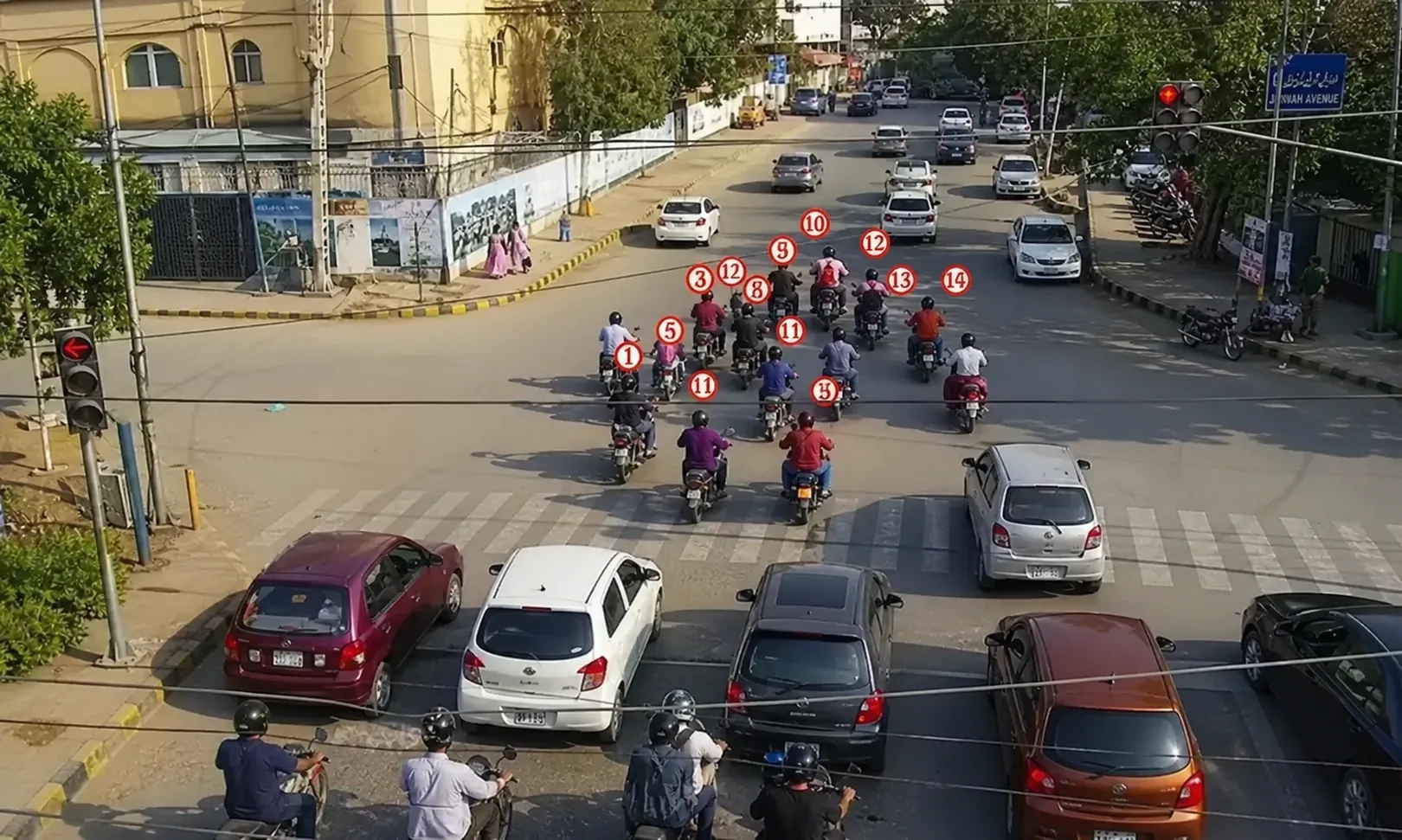

If you drive on Sharea Faisal today, the cameras are watching — and this time they are issuing fines automatically.
The Karachi e-challan system for lane violations on Sharea Faisal went live on June 1, 2026. Pakistan Today confirmed Karachi Traffic Police are using the existing surveillance camera network installed along one of the city’s busiest arterial roads to enforce designated lanes for different vehicle categories — automatically, without a traffic warden needing to physically intercept you.
For the millions of Karachiites who use Sharea Faisal daily, this is a significant shift in how traffic rules are enforced.
How the Karachi E-Challan System Works
The Karachi e-challan system operates entirely through camera automation. When a vehicle is captured in the wrong lane by the surveillance network, the system reads the number plate, links it to the vehicle’s registration record, and generates an electronic challan.
DIG Traffic Peer Muhammad Shah had outlined the plan to Geo News in the days before the June 1 launch — describing it as a new traffic management plan for Sharea Faisal aimed at introducing an organised lane system using the camera infrastructure already installed there.
Pakistan Today confirmed the traffic police spokesperson urged the public to observe lane discipline strictly, noting that motorcycles, buses, and cars will all be required to comply with the designated lane system.

Which Lanes Are for Which Vehicles?
Based on the traffic management plan:
- Left lane (slow lane): Motorcycles, rickshaws, and slow-moving vehicles
- Middle lane(s): Cars, taxis, and private vehicles
- Right lane (fast lane): Express buses and through-traffic
Violating your designated lane triggers an automatic Karachi e-challan from the surveillance camera network.

What Happens If You Get an E-Challan?
The process is straightforward but requires prompt action:
- The camera captures your vehicle’s number plate during the lane violation
- An e-challan is generated and linked to the vehicle registration on file
- You receive notification of the fine
- Payment must be made within the specified period — delays increase the penalty
The Karachi e-challan system is designed to eliminate the friction that has historically allowed drivers to negotiate with or avoid traffic wardens on the spot. The camera does not negotiate.

What This Means for Different Drivers
Car drivers: Stay in the middle lanes. Do not weave between lanes. The cameras capture footage continuously — not just at specific checkpoints.
Motorcycle riders: Stick to the designated slow lane on the far left. Riding in the fast lane — even briefly — will generate an automatic challan.
Bus and coaster drivers: Use the designated bus lane only. Stopping in the middle of the road for passengers, a common practice on Sharea Faisal, could trigger violations if captured in the wrong lane.
Uber and Careem drivers: Frequent pickups and drops on Sharea Faisal are now higher-risk. Plan pickup and drop-off points away from camera zones where possible.

What Happens If the Pilot Succeeds
The Karachi e-challan launch on Sharea Faisal is explicitly a pilot project. If it demonstrably reduces lane violations and accident rates on this corridor, Karachi Traffic Police have indicated the system could expand to other major roads — I.I. Chundrigar Road, Shahrah-e-Faisal extension, University Road, and Korangi Road have all been mentioned in traffic management discussions.
The success of this system will depend on how reliably the cameras capture violations and whether the fine notification and payment infrastructure handles volume at scale without errors.
24PakTimes will monitor the system’s first week of operation — including any reports of wrongful challans, camera accuracy issues, or payment process problems — and report back.